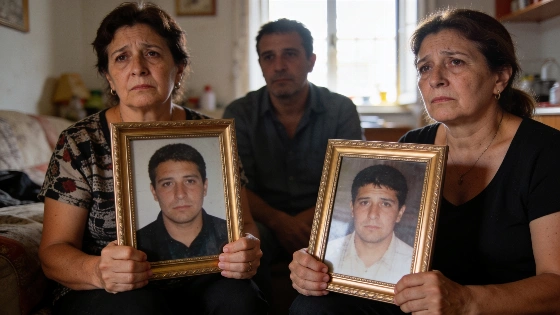
Relatives of two Spaniards imprisoned in Equatorial Guinea accuse Spain’s Foreign Ministry of failing to secure their release. They demand 180000 euros for alleged inaction. The case exposes diplomatic tensions and risks for Spanish citizens abroad.
Two Spanish citizens remain in one of Africa’s most notorious prisons, while their families demand 180000 euros from Spain’s Foreign Ministry, accusing it of failing to protect their rights or secure their release. The claim, filed in late May, calculates the daily harm suffered by Javier Marañón Montero and David Rodríguez Ballesta since their arrest in January 2025, and threatens legal action if Madrid does not respond.
Both men, employees of the Spanish company Wayang Teknica, have been held in Black Beach prison in Malabo, Equatorial Guinea, after authorities accused their employer of unpaid debts linked to a digital television contract. Their relatives describe the detention as a political hostage situation, saying the men are being used as bargaining chips in a wider diplomatic standoff between Madrid and the regime of Teodoro Obiang.
Black Beach prison has been repeatedly condemned by international human rights organizations for its harsh conditions and reports of torture and abuse.
Despite repeated meetings with Foreign Minister José Manuel Albares and Consular Affairs chief Carolina de Manueles, the families say official efforts have fallen short. The Ministry insists the welfare of the detainees is a priority, citing 25 consular visits, regular contact, and delivery of food and medicine. Still, the men remain in harsh conditions, denied access to lawyers and outside doctors, and unable to communicate freely with their families in Spain.
Health concerns are growing. Rodríguez, a 45-year-old technician from Granada, has lost 26 kilos and suffers from hypertension and severe headaches. Marañón, a 51-year-old accountant from Córdoba, has contracted malaria and filaria, suffers from asthma and heart problems, and attempted suicide in late 2025. Prison authorities have refused to transfer him to a hospital, ignoring medical recommendations.
The families’ legal claim argues that Spain’s diplomatic and consular interventions have failed to end what they call an illegal deprivation of liberty. They point to the broader political context: the withdrawal of the Guinean ambassador from Madrid, and the ongoing Spanish judicial case against Carmelo Ovono Obiang, son of the dictator, for the kidnapping and torture of opposition figures in Spain. The relatives believe the two workers are being held as leverage in this dispute.
According to a 2023 report by Human Rights Watch, Equatorial Guinea has one of the highest rates of arbitrary detention in Central Africa, with political prisoners often held without trial for extended periods. The country’s judiciary is widely criticized for its lack of independence and susceptibility to political influence, making legal recourse for foreign detainees especially challenging.
Inside Black Beach, conditions are dire. The men share overcrowded cells with common criminals, lack access to potable water and adequate food, and are barred from making phone calls or receiving legal documents. Their request to make a will has been blocked by prison rules. Attempts by Spanish NGOs to visit or deliver medicine have been stopped at the prison gates.
In a written response, the Foreign Ministry says it is doing everything possible, but the families are unconvinced. They accuse officials of failing to act at the United Nations and of not applying enough bilateral pressure or engaging the company to resolve the alleged extortion. The legal claim notes that the men’s pretrial detention has already tripled the legal maximum, with no diplomatic breakthrough.
As reported in a previous investigation, Spain’s diplomatic challenges abroad are not limited to this case, but the Black Beach detentions show the limits of Madrid’s leverage when citizens are caught in international disputes.
Spain’s consular protection obligations are under scrutiny. The case highlights the vulnerability of Spanish nationals working in high-risk environments, especially where local justice is subordinate to political interests. The government’s cautious approach may reflect the complexity of dealing with authoritarian regimes, but for the families, the lack of progress is intolerable. The demand for compensation is not just about money—it is a direct criticism of Spain’s ability to defend its citizens when diplomacy fails. If Madrid cannot secure the release of two workers after months of negotiations and mounting health risks, it raises questions about the real power of Spanish passports in hostile jurisdictions.