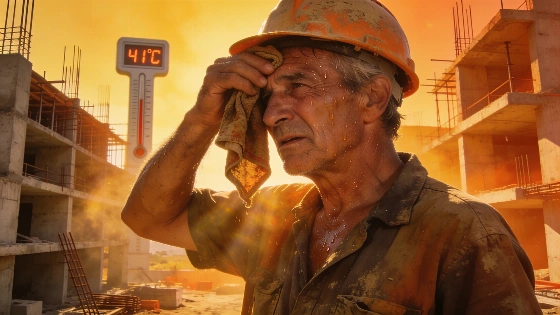
When the mercury climbs past 40°C, construction work in Murcia becomes a test of endurance and safety. Veteran builder Paco Nicolás describes the daily risks, while new regulations and local initiatives push companies to rethink how they protect workers from heat stress.
At 9:30 in the morning, the thermometer at a housing site in Guadalupe, Murcia, already reads 34.5°C. For Paco Nicolás, who has spent three decades in construction, this is just the start of another punishing summer day. As temperatures soar past 40°C, the job becomes not just physically demanding, but potentially dangerous.
Continuous hydration is essential, but as Nicolás and his colleagues know, water alone is not enough. By early afternoon, the heat is described as “overwhelming,” yet the work must go on. The combination of intense physical effort and relentless sun exposure sharply increases the risk of heat stress and heatstroke, making every outdoor shift a calculated risk.
Heat Risks on the Job
Standard safety measures—drinking water, taking breaks, and seeking shade—are no longer sufficient when the heat becomes extreme. The National Institute for Safety and Health at Work recommends a gradual acclimatization to high temperatures, limiting exposure during peak hours, providing shaded rest areas, adjusting work pace, and maintaining constant hydration. Workers are also advised to wear loose, breathable clothing, protect their heads and eyes, use sunscreen, avoid working alone, and call emergency services at the first sign of heatstroke.
However, these precautions have limits. When preventive evaluations show that safety cannot be guaranteed, companies are required to go further—sometimes even halting work altogether.
Legal Obligations and Changing Schedules
Spanish law, specifically Royal Decree 486/1997, obliges employers to take action against adverse weather in outdoor jobs. Risk assessments must consider not only the nature of the work but also each worker’s personal circumstances. If the national weather agency Aemet issues an orange or red alert and existing measures are inadequate, companies must adapt—by changing schedules, reducing hours, or suspending tasks during the most dangerous periods. Simply handing out water does not fulfill the legal duty to protect staff.
Murcia’s Proactive Approach
In anticipation of extreme heat, Murcia’s construction sector has taken additional steps. In 2025, FRECOM and the Colegio de Aparejadores de la Región de Murcia signed an agreement to provide technical advice to companies. This support is complemented by a personalized alert system that sends Aemet forecasts via email or WhatsApp 24 hours in advance, allowing firms to reschedule shifts and tasks before risks escalate. According to regional authorities, no heatstroke accidents were reported in Murcia’s construction sector during the summer of 2024. Preventive campaigns continue, with renewed emphasis on heat and thermal stress as the summer season approaches.
While these measures are crucial, the reality on the ground remains challenging. As Paco Nicolás and his team demonstrate, adapting to extreme heat is a daily negotiation between productivity and safety. The lessons from Murcia echo broader concerns about workplace risks in a warming climate—a topic that also intersects with everyday safety habits, such as the importance of not leaving keys in doors overnight, as highlighted in this recent report on emergency access risks.