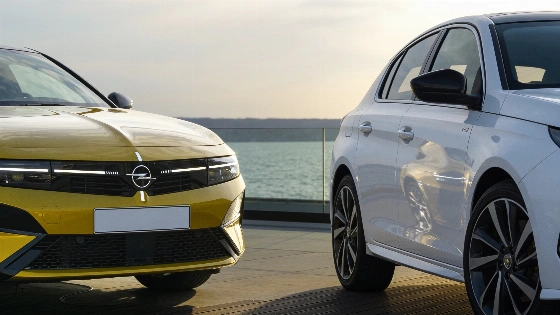
Opel Astra and Peugeot 308, both built on Stellantis DNA, go head-to-head in the hybrid compact segment. We break down their strengths, differences, and what matters most for Spanish drivers.
Choosing between the Opel Astra and Peugeot 308 is no longer just a matter of taste—it's a question of which compact hybrid best fits the demands of Spanish roads and lifestyles. Both models, developed under the Stellantis umbrella, share much of their engineering, yet their personalities and priorities diverge in ways that matter for buyers.
Design and Practicality
The Opel Astra, measuring 4.37 meters long and 1.86 meters wide, presents a refreshed look with its updated Vizor front and illuminated Opel Compass logo. It’s the last Astra to be produced in Germany before manufacturing shifts to Italy in 2030. The Astra is available as a five-door hatchback or a Sports Tourer estate, the latter offering up to 597 liters of boot space (516 liters in plug-in hybrid form). Even the hatchback’s 422-liter trunk edges out the Peugeot 308, though hybrid versions drop to 310 liters.
Inside, the Astra favors a traditional dashboard layout, prioritizing intuitive controls and straightforward menus. Standard Intelli-Seats, designed to reduce pressure on long journeys, and optional AGR multi-adjustable seats with heating and massage functions, add comfort. However, material quality lags slightly behind its French rival, especially considering the Astra’s starting price of €24,650 with discounts and financing.
Peugeot 308: Style and Technology
The Peugeot 308, at 4.36 meters long and 1.85 meters wide, leans into a more expressive design. Its recent restyling softened the signature LED fangs, replacing them with triple-stripe headlights. The cabin is dominated by Peugeot’s i-Cockpit, featuring a digital instrument cluster positioned above the compact steering wheel. While visually striking, the layout can take time to master and may not suit everyone’s ergonomic preferences.
Passenger space is comparable to the Astra, but the 308’s boot is slightly smaller at 412 liters (314 liters for the plug-in hybrid). The 308 starts at €25,370 with current offers, positioning it close to its German counterpart in terms of price.
Engines and Hybrid Technology
Both cars offer a nearly identical range of powertrains, reflecting their shared Stellantis platform. The entry-level option is a 1.2T XHT Hybrid, a 145 hp three-cylinder turbo with mild hybrid technology and an ECO label from the DGT. Diesel fans can opt for a 1.5-liter 130 hp engine, paired with an automatic transmission.
Plug-in hybrid versions differ slightly: the Astra combines a 150 hp petrol engine with a 125 hp electric motor and a 14.6 kWh battery, delivering up to 84 km of electric range and earning a CERO label. The Peugeot 308’s PHEV variant offers a total of 195 hp, a larger 17.2 kWh battery, and up to 85 km of electric range, with charging speeds up to 7.4 kW and Plug&Charge functionality for compatible stations.
Both models also feature a fully electric version with 156 hp and a range of around 450 km (WLTP), though this option remains a niche choice in the Spanish market. The Astra’s electric variant includes Vehicle-to-Load (V2L) capability, allowing the battery to power external devices—a feature increasingly common in new EVs.
Driving Experience and Comfort
On the road, the Astra delivers a neutral, predictable ride, emphasizing comfort and ease of use. Its insulation from road noise is adequate but not class-leading. The Peugeot 308, by contrast, feels more agile and responsive, appealing to drivers who value a dynamic edge. However, its high-tech cockpit may require a period of adjustment, especially for those used to more conventional layouts.
For buyers prioritizing practicality and straightforward controls, the Astra stands out. Those drawn to bold design and advanced digital features may find the 308 more compelling. Both cars offer strong hybrid credentials and a broad range of options, but the choice ultimately comes down to personal preference and daily needs.
Context and Market Trends
While SUVs have overtaken compact cars in popularity across Europe, models like the Astra and 308 remain relevant for drivers seeking a balance of efficiency, space, and urban maneuverability. Their hybrid and electric variants reflect a broader shift toward electrification, a trend also seen in other segments—such as the rise of electrified SUVs like the Jeep Compass 4xe, which has set new standards for off-road capability and range, as highlighted in this recent analysis.
For Spanish consumers, the decision between Opel Astra and Peugeot 308 is less about technical differences and more about which approach—traditional comfort or avant-garde technology—best fits their lifestyle. Both models offer credible alternatives to the SUV mainstream, with hybrid powertrains that meet evolving environmental standards and urban regulations.