The Popular Party accuses Pedro Sánchez of sparing Morocco from blame in the Ceuta crisis. PP demands the King visit Ceuta soon and questions the government's focus on other alleged culprits.
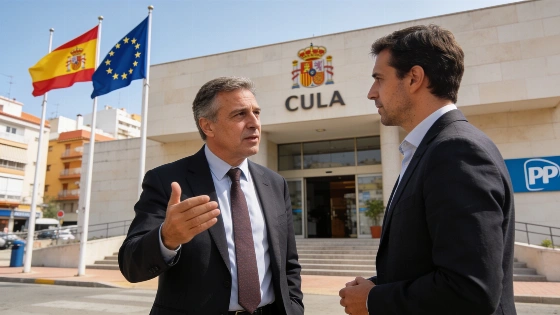
The Popular Party (PP) has sharply criticized Prime Minister Pedro Sánchez for refusing to hold Morocco accountable in the ongoing Ceuta crisis, instead attributing responsibility to other international actors. During a press conference following the party's leadership meeting, PP spokesperson Borja Sémper accused Sánchez of deflecting blame onto Russia, Israel, and what he called the “international far-right,” while ignoring Morocco’s involvement. Sémper remarked that Sánchez “has blamed everyone except Franco,” highlighting the party’s frustration with the government’s narrative.
PP leaders argue that Morocco could not have been unaware of the mass movement of people across its territory toward Ceuta. Sémper questioned the plausibility of 80,000 people crossing Morocco and entering Spain without the knowledge of Moroccan authorities. He insisted that the Spanish government’s reluctance to address Morocco’s role undermines public trust and fails to address the real issues at stake.
At the same time, the PP is intensifying pressure on the government to arrange an immediate visit by the King to Ceuta. Sémper stated that if Alberto Núñez Feijóo were prime minister, he would already be preparing to accompany the monarch to the city, emphasizing the importance of the King’s presence for Ceuta’s residents. The party rejects the idea of waiting until after Morocco’s legislative elections on September 23, arguing that the visit should not be delayed for political reasons.
The PP also criticized Sánchez for what they describe as a “conspiratorial” approach, accusing him of focusing on alleged misinformation campaigns from Russia, Israel, and the far-right, rather than addressing the responsibilities of both the Spanish and Moroccan governments. Sémper argued that the government’s investigation appears selective, with Morocco’s role being excluded from scrutiny while other actors are blamed for fueling the crisis.
According to Sémper, the government’s “delicacy” with Morocco contrasts with its “harshness” toward Ceuta’s citizens. He dismissed the theory that a wave of disinformation orchestrated by foreign actors was the main driver of the crisis, calling for a more direct acknowledgment of Morocco’s involvement. The PP maintains that the King has every right to visit any part of Spain at any time, and that his presence in Ceuta would provide reassurance to local residents.
This political standoff comes as the government faces mounting criticism over its handling of the situation in Ceuta. The debate over responsibility and the timing of the royal visit has become a focal point in Spanish politics, with the PP seeking to position itself as a defender of national interests and transparency. The issue has also drawn attention in previous weeks, as highlighted in reports such as the analysis of political tensions and urgent measures proposed by the PP in response to the Ceuta crisis, available here.
Ceuta, a Spanish enclave on the North African coast, has long been a flashpoint for migration and diplomatic tensions between Spain and Morocco. The recent surge in arrivals has intensified scrutiny of border management and bilateral relations. The PP’s demands for a royal visit and a clearer stance on Morocco’s role reflect broader concerns about sovereignty, security, and the government’s crisis response. As the situation develops, the focus remains on how Spanish authorities will balance diplomatic sensitivities with domestic expectations for accountability and action.