From August 2026, Spain’s hospitality sector must adapt to sweeping EU packaging regulations. While most single-use plastic sachets will be banned by 2030, some exceptions remain. Businesses are already searching for alternatives to comply and maintain food safety.
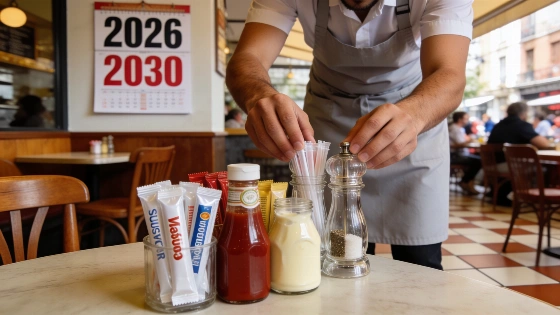
Plastic sachets for sugar, ketchup, and other condiments will soon become a thing of the past in Spanish bars and restaurants. The European Union’s new packaging regulation, adopted in December 2024 and published in January 2025, sets a clear timeline: general rules apply from August 12, 2026, but the specific ban on single-use plastic portions in hospitality will not take effect until January 1, 2030.
For now, customers will still find familiar plastic packets on café tables. However, the clock is ticking for the hospitality industry to overhaul its approach to single-serve packaging. The regulation, known as Reglamento (UE) 2025/40, prohibits the introduction of certain formats listed in Annex V from 2030. This includes the single-use plastic sachets commonly used for sugar, ketchup, mayonnaise, mustard, and similar products. While salt is not explicitly named, it may fall under the broader category of condiments or dressings, meaning its plastic packaging could also be affected.
What Will Disappear
The ban targets a wide range of single-portion packaging: not just sachets, but also small tubs, trays, and boxes for condiments, sauces, milk for coffee, and sweeteners. The restriction applies specifically to plastic containers, not the food itself. Restaurants and cafés will need to find new ways to offer these products, such as refillable dispensers, reusable containers, or packaging made from alternative materials.
Simply switching from plastic to paper is not enough if the paper contains a significant plastic layer. According to the European Commission’s 2026 guidance, any packaging with 5% or more plastic content falls under the ban, even if it is mostly paper. Compostable packaging is also not automatically exempt if it is still considered single-use plastic under the regulation.
Exceptions and Practical Challenges
There are limited exceptions. Single-use sachets can still be provided with takeaway meals intended for immediate consumption, and in healthcare settings such as hospitals or care homes where hygiene and safety are paramount. Outside these cases, the hospitality sector must complete the transition by 2030, balancing regulatory compliance with the need to preserve product quality and food safety.
For many businesses, the shift will require careful planning and investment. Sourcing suitable alternatives, training staff, and updating supply chains are all part of the process. The experience of adapting to new standards is not unique to food service: other sectors, such as bathroom design, have also faced regulatory-driven change, as seen when walk-in showers began replacing traditional shower trays in response to evolving norms.
Looking Ahead
As the 2030 deadline approaches, Spain’s bars and restaurants are under increasing pressure to innovate. The new rules reflect a broader European push to reduce plastic waste and promote sustainability, but they also highlight the practical complexities of changing long-standing habits in daily life. For now, plastic sachets remain on the table—but not for much longer.