A key parliamentary vote has advanced a law granting Spanish nationality to Sahrawis born in the former colony and their descendants. The PP's abstention proved decisive. The measure now awaits a full Congress vote in September.
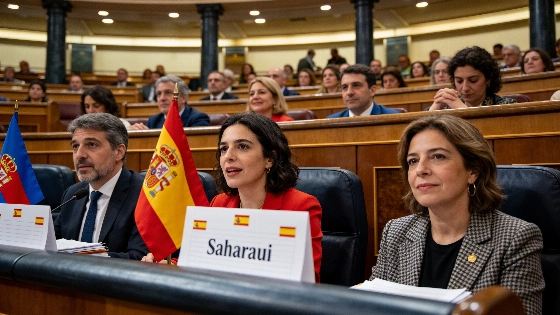
A decisive shift in the Spanish Congress has propelled a long-debated law granting Spanish nationality to Sahrawis born in Western Sahara during its time as a Spanish colony, as well as their direct descendants. The Justice Committee, meeting in an extraordinary session, approved the bill with 19 votes in favor, three against, and 15 abstentions. The unexpected abstention of the Partido Popular (PP) was crucial, removing a major obstacle and ensuring broad support for the measure.
The bill, initially presented by Sumar in February 2025, had faced uncertainty over party positions. The PP, which had previously supported the bill's consideration but voted against the committee report in June, ultimately chose not to block the law. This move contrasted with Vox, whose representatives voted against the proposal, despite expressing sympathy for the Sahrawi people under Moroccan occupation. Sumar, one of the main backers, emphasized that the law is not a new concession but a restoration of rights lost when Spain withdrew from the territory.
The session was marked by last-minute tension after the Socialist Party (PSOE), reportedly following guidance from the Ministry of Foreign Affairs, introduced amendments to remove references to the “Sahrawi people” from the bill’s preamble. The aim was to avoid diplomatic friction with Morocco by replacing the term with “Sahrawi population” or simply “Sahrawis.” However, these amendments were rejected, while technical changes agreed by the coalition of PSOE, ERC, Sumar, Bildu, and PNV were approved. One such change delays the law’s entry into force from two to four months after publication in the official gazette.
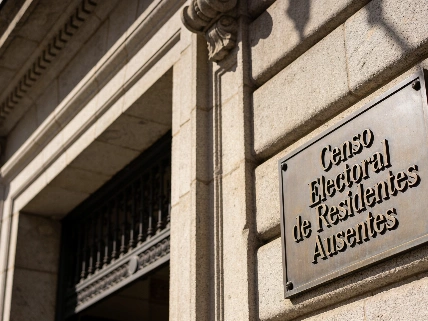
The legislation grants Spanish nationality by naturalization to anyone born in Western Sahara before 29 September 1977, regardless of current legal residence in Spain. This date reflects the end of the period during which Sahrawis could opt for Spanish nationality, a right many could not exercise due to the territory’s occupation by Morocco and Mauritania. Applicants will be able to prove their Sahrawi status through various documents, including expired Spanish ID cards, UN census receipts, legalized birth certificates, family books, or other official Spanish documents showing birth in the former colony before the cutoff date.
Once the law takes effect, eligible individuals will have three years—extendable to four—to submit their applications to the Directorate General for Legal Security and Public Faith, which must respond within 12 months. Applications can also be filed online via the Ministry of Justice’s electronic portal. The law is expected to benefit around 70,000 Sahrawis who lived in the territory, as well as their first-degree descendants, who will have five years after their parents’ registration to apply for nationality. Estimates suggest the total number of potential beneficiaries could reach between 100,000 and 200,000, including many living in refugee camps in Tindouf, Algeria, as well as in Moroccan-controlled Western Sahara and other countries.
Looking ahead, the law will also allow Sahrawis to obtain Spanish nationality by residence after just two years of legal residency, aligning their status with that of Latin Americans, Sephardic Jews, and nationals of the Philippines, Equatorial Guinea, and Portugal. This represents a significant change from the standard ten-year residency requirement for most foreigners.
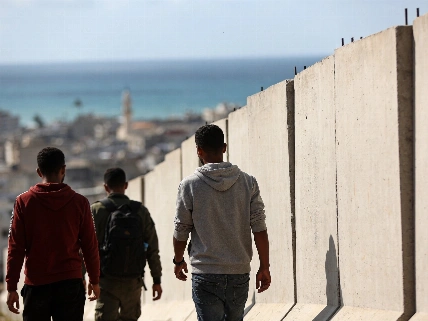
Western Sahara was a Spanish colony until 1975, after which Spain withdrew and the territory was occupied by Morocco and Mauritania. The issue of Sahrawi nationality has remained unresolved for decades, with many Sahrawis unable to claim Spanish citizenship despite historical ties. The new law, if passed by the full Congress and Senate, would address a longstanding legal gap and could have implications for Spain’s relations with Morocco and the broader North African region. The final vote in the full Congress is scheduled for September.