Spanish intelligence expects more covert hostile acts targeting Ceuta and Melilla. Military intervention is seen as unlikely, but hybrid tactics and social tension are set to increase.
Spanish intelligence services have concluded that Ceuta and Melilla are likely to face a surge in covert hostile actions in the coming months, focusing on the so-called 'grey zone'—a strategic space between peace and open conflict. According to reports accessed by EL PAÍS, while a direct military move by Morocco is considered highly unlikely in the short or medium term, the risk of hybrid tactics such as cyberattacks, disinformation, sabotage, and orchestrated migration flows is rising.
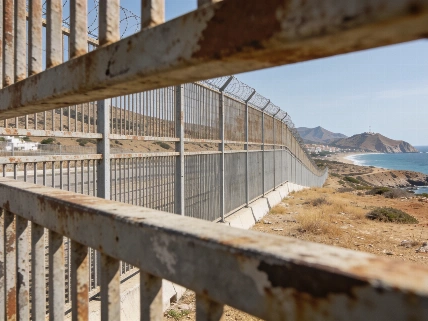
Recent years have seen the 'grey zone' concept gain prominence in geostrategic analysis. This ambiguous area complicates attribution of attacks and delays military responses. Examples include the mass crossings at the Morocco-Ceuta border in 2021 and 2026, as well as similar incidents on the Poland-Belarus frontier. Such actions, often carried out by state-backed proxies or non-state actors, aim to destabilize adversaries and achieve political objectives without triggering open warfare.
During the latest crisis, not only did thousands cross into Ceuta, but social media campaigns also called for cyberattacks on Spain’s Ministry of Foreign Affairs and sabotage of Ceuta’s electricity grid. These hybrid threats mirror tactics used elsewhere, such as Russia’s annexation of Crimea in 2014, and are now embedded in the strategic doctrines of NATO, the EU, and Spain. However, there is still no unified approach on how to counter them, despite the availability of political, diplomatic, and economic tools—provided the aggressor can be clearly identified.
Intelligence assessments rule out that the Majzén, Morocco’s royal power circle, orchestrated the mass entry of 72,000 people into Ceuta, of whom 5,000 reportedly remain in the city. Unlike the 2021 incident, when Moroccan officials did not deny involvement, this time Rabat has avoided public statements. Still, analysts believe Morocco has used the crisis to reinforce its sovereignty claims over Ceuta and Melilla.
Contrary to some media interpretations, Spanish intelligence does not link the July events to Prime Minister Pedro Sánchez’s recent visit to Algeria. Instead, they point to the new UK-EU agreement on Gibraltar, which places border control under Spanish authority and has sparked debate in Moroccan media about the status of Ceuta and Melilla. Intelligence sources highlight the passive stance of Moroccan security forces during the peak of the Ceuta border breach, with footage showing Moroccan gendarmes allowing vehicles carrying migrants to approach the frontier.
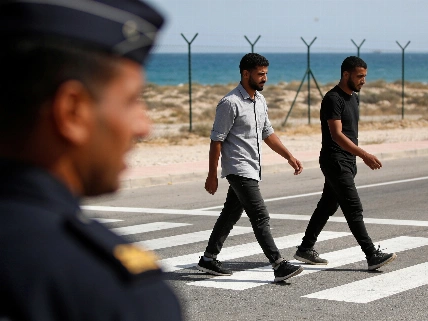
These images, considered credible by Spanish intelligence, suggest involvement from higher authorities in Morocco. Yet, before and after the July 30 incident, Moroccan forces reportedly cooperated with Spanish authorities, especially as most migrants voluntarily returned in the days following the mass entry.
Investigators have identified individuals managing Facebook and WhatsApp groups that spread false interpretations of a Supreme Court ruling and provided practical information for crossing the border. However, there is no conclusive evidence linking these groups to any foreign intelligence service.
In late July, authorities detected a gathering of 1,000 to 2,000 people on the Moroccan side, preparing to swim to Ceuta. This was initially seen as a seasonal migration flow, but it was amplified by misinformation and reduced Moroccan border vigilance due to the Throne Day celebrations and King Mohamed VI’s presence in Tetouan. On July 29, the CNI warned Ceuta’s government delegation about a social media campaign urging mass entry, with some groups boasting up to 180,000 followers.
Despite these warnings, tens of thousands joined the crossing spontaneously, triggered by viral TikTok videos showing successful entries. The situation quickly escalated into chaos. After this episode, Moroccan security forces shifted tactics and prevented a new attempt on August 15, reflecting the reputational risks Morocco faces internationally despite its political gains.
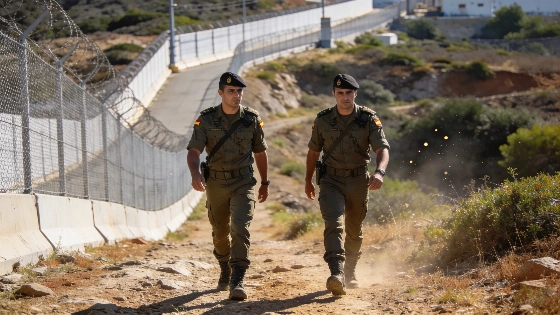
Looking ahead, intelligence reports estimate less than a 10% chance of military action against Ceuta and Melilla, but up to a 60% probability of increased hostile activity in the 'grey zone.' While Spain has deployed over 3,000 soldiers for patrols, experts stress that the response must also be diplomatic and coordinated at the European level.
For additional context, Spain’s government previously allocated €165 million to Ceuta to address the strain on local services caused by migration pressures, as reported in a related analysis by russpain.com. Ceuta and Melilla’s unique status as Spanish enclaves in North Africa continues to make them focal points for regional tension and hybrid threats, requiring ongoing vigilance and adaptive strategies from Spanish authorities.