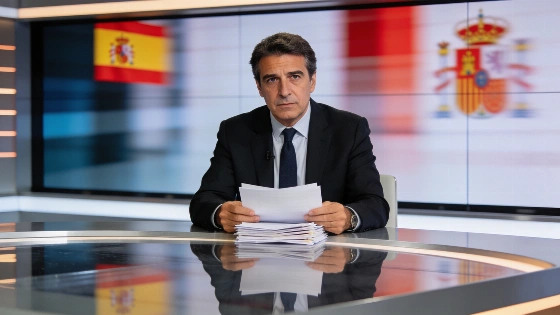
Vicente Vallés predicts sharper political tension if Pedro Sánchez completes his term without early elections. The Antena 3 Noticias 2 anchor points to a turbulent period ahead for Spain’s institutions and public life.
If Pedro Sánchez decides to serve out his full term until 2027 without calling early general elections, Spain could be in for a rougher political stretch. Vicente Vallés, anchor of Antena 3 Noticias 2, has warned that political friction is likely to get worse if the government holds off on an early vote.
In an interview with El Huffington Post, Vallés was direct about the possible fallout. He said that political tension, already running high, will probably increase as Spain moves through a series of regional and national elections. For Vallés, just having elections on the horizon keeps the atmosphere charged, and waiting until 2027 for a general election would only stretch out and deepen these divisions.
Pedro Sánchez has publicly confirmed his intention to see the legislature through to 2027, but has not ruled out a 'technical' adjustment of the election date within that year.
His comments come as the Spanish media and political world are still reacting to Sánchez’s previous election timing. Many remember Àngels Barceló’s live reaction on Cadena SER when Sánchez announced the 2023 general election date in the middle of summer. That announcement disrupted political schedules and the routines of journalists, showing how closely the media’s agenda is tied to the government’s electoral calendar.
Vallés pointed out that Spanish politics is rarely calm, and he doesn’t expect that to change. Even the last two years, with relatively few elections, were marked by tension. With more regional votes ahead and the possibility of Sánchez serving a full four-year term, Vallés expects the next two years to bring even sharper clashes and little chance for a political breather.
The strain between Spain’s institutions isn’t new. As reported earlier, the Ceuta crisis exposed deep rifts at the top, showing how political decisions can quickly turn into broader institutional conflicts. If Sánchez holds out until 2027, these patterns could get worse.
Spanish media link the possible adjustment of the general election date to the government’s desire to separate national elections from the municipal and regional votes scheduled for May 2027. Reports indicate that Moncloa is considering either an earlier date in early 2027 or the latest permissible date in summer 2027.
Vallés’s analysis focuses on the day-to-day impact. Long stretches without a general election tend to harden political positions, making compromise harder and fueling ongoing confrontation. For the public, this means more heated debates, less policy stability, and a media cycle dominated by speculation instead of real progress.
Election timing in Spain is never just a technical detail. Waiting until 2027 would shape the mood and pace of national life. With institutional trust already under strain, dragging out the current standoff could deepen polarization and erode confidence in the system. Vallés’s warning is a reminder that the timing of elections affects more than party fortunes. If Sánchez serves the full term, Spain could see a period of greater instability, with real consequences for governance, public trust, and the country’s image abroad.