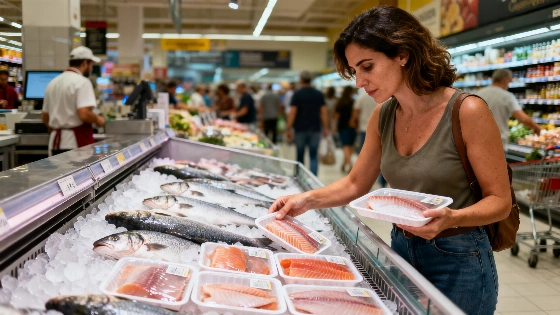
A new study warns that keeping fish in plastic packaging—even in the freezer—can lead to chemical contamination. The longer the storage, the higher the risk, with some plastics and even compostable trays posing unexpected dangers.
Placing fresh fish into a plastic tray or wrapping it in cling film before stashing it in the fridge or freezer is a routine step in many Spanish homes. But new research from the IDAEA-CSIC and the University of Florence, published in Environment International, shows this habit may be less harmless than it seems. The study found that fish can absorb chemicals from common packaging materials—including trays, transparent films, and freezer bags—during storage, and this process continues even at freezing temperatures as low as -18°C. After just one month in the freezer, contamination levels in the fish were at their highest.
How Chemicals Migrate Into Fish
Until now, most studies focused on contaminants present in food at the point of purchase. This new research, led by Maria Vittoria Barbieri, tracked what happens when consumers store fish at home for days or weeks. The team analyzed 49 chemicals commonly used in food packaging, such as plasticizers and bisphenols, which are found in the packaging materials used by supermarkets and fishmongers across Spain.
The results were clear: fish stored in plastic packaging contained significantly higher levels of these chemicals compared to fish that had not been in contact with plastic. The longer the fish remained in its packaging, the more contaminants were detected. The type of packaging, storage time, temperature, and even the fish species all influenced the degree of chemical migration.
Which Chemicals Are Most Concerning?
Not all chemicals migrate equally. The study highlighted DEHA, a plasticizer added to make plastics more flexible, as one of the most mobile substances. DEHA is commonly found in cling film and freezer bags. In some cases, especially with fatty fish like salmon, over 95% of the DEHA present in the packaging ended up in the fish. While DEHA is now used as a replacement for phthalates, its health effects remain largely unknown.
However, the main concern centers on bisphenol A (BPA), a chemical linked to hormonal disruptions. Although dozens of compounds were detected, BPA accounted for nearly all the potential health risk identified in the study. Fatty fish such as salmon tend to accumulate fat-soluble chemicals, while water-soluble bisphenols are more likely to migrate into leaner species like hake.
Regulation and the BPA Ban
Spain began restricting BPA in food packaging in 2022, and the European Union followed with a full ban on BPA in food-contact materials, effective January 2025. However, manufacturers have been granted transition periods, with some types of packaging allowed until 2028. The director of IDAEA-CSIC has called for strict enforcement of these laws and urges producers to remove BPA from packaging as soon as possible to reduce public exposure.
Compostable Trays: Not Always Safer
One of the study’s most surprising findings was that compostable trays, often marketed as eco-friendly, did not perform better than conventional plastics. In fact, the highest levels of chemical migration were found in hake stored for a month in compostable packaging. These materials may contain even more plasticizers than petroleum-based plastics, as extra additives are needed to achieve similar performance. The researchers warn that consumers have little information about the chemicals present in packaging, making it difficult to make informed choices at the supermarket.
Freezing Doesn’t Stop Contamination
It was previously assumed that heat was the main driver of chemical migration from packaging to food. This study overturns that belief, showing that even at -18°C, chemicals continue to transfer into fish. The findings suggest that the materials used for long-term frozen storage deserve closer scrutiny, and that similar risks may exist for other foods like dairy and meat. The researchers also stress the need for more toxicological data on new additives entering the market.
How to Store Fish More Safely
Children and infants are especially vulnerable, as they receive a higher dose of contaminants relative to their body weight, even if they eat less fish. To minimize risk, the study recommends using glass containers for home storage, considering cloth bags without plastic additives, and keeping frozen storage times as short as possible. Practical steps include:
- Storing fish in glass containers rather than plastic.
- Avoiding long-term freezing—don’t keep fish in the freezer for months.
- Reducing prolonged contact with trays, cling film, or plastic bags.
- Opting for cloth bags without plastic additives when feasible.
The bottom line: the less time fish spends in contact with certain packaging, the lower the potential exposure to harmful chemicals. While there’s no need for panic, these findings suggest it’s worth rethinking everyday storage habits.
For those interested in other hidden risks in the home, such as the legal and safety issues around inflatable pools on balconies, see this analysis on what Spanish law really allows for balcony pools.