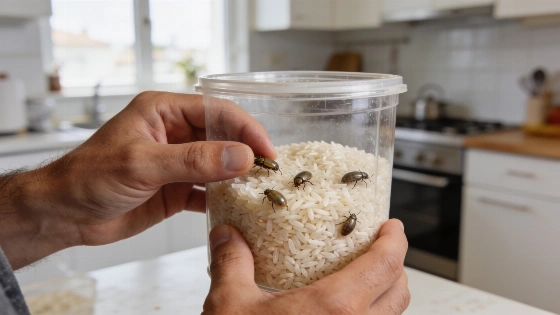
Small beetles like weevils can hide for weeks inside rice and cereals, contaminating food without being noticed. Rising summer temperatures in Spain create ideal conditions for these pests to thrive. Here’s how to spot, eliminate, and prevent infestations before they spread.
Spotting a tiny beetle in a bag of rice or flour is a familiar summer nuisance for many Spanish households. According to the Ministry of Agriculture, these pantry pests become active as soon as temperatures climb above 15°C, with their development accelerating past 20°C. The combination of heat and humidity in the warmer months creates the perfect breeding ground for weevils and similar insects, which can remain hidden inside grains for weeks before anyone notices.
Weevils, particularly those from the Sitophilus genus, are notorious for infiltrating sealed packages. A female weevil can bore into a grain, lay an egg, and leave the larva to develop undetected. At 25°C and 75% humidity, the full life cycle—from egg to adult—can be completed in just 40 to 45 days. This hidden growth means infestations often go unnoticed until adult beetles emerge, sometimes months after the initial contamination.
How Heat and Humidity Fuel Infestations
The Ministry of Agriculture, Pesca y Alimentación (MAPA) highlights temperature and humidity as the main drivers of pantry pest outbreaks. Most species require at least 20°C to reproduce efficiently, while humidity above 50% further accelerates their activity. Foods with more than 13% moisture are especially vulnerable. Not all beetles found in the pantry are true weevils—some, like Tribolium, prefer damaged grains or flour, but all can contaminate a wide range of dry goods.
Warning Signs in Your Pantry
The most obvious sign of an infestation is spotting a small beetle inside a cupboard. However, subtler clues often appear first: round holes in grains, empty husks, powdery residue, or pale larvae. Damaged grains may float when placed in water, but a thorough inspection of all nearby products is essential. Infestations can spread to rice, wheat, pasta, legumes, nuts, seeds, spices, and even pet food. Importantly, the presence of these insects does not necessarily indicate poor hygiene—contamination can occur during production, transport, or storage.
While pantry beetles do not bite or sting, they can spoil far more food than they consume. Any visibly infested product should be discarded entirely, not just cleaned of insects, to prevent further spread.
Effective Elimination: Step by Step
Eradicating a pantry pest problem requires more than just spraying insecticide. The key is to identify and remove the source. Experts recommend the following steps:
1. Empty the affected shelf or cupboard and inspect every dry food item.
2. Discard infested products in a sealed bag and remove them from the home.
3. Vacuum shelves, corners, joints, and cracks to remove any remaining insects or debris.
4. Immediately empty the vacuum or dispose of the bag to avoid reinfestation.
5. Store unaffected foods in airtight containers or refrigerate them temporarily.
After cleaning, surfaces can be washed with soap and water and left to dry. Disinfectants alone will not prevent a return, and insecticides should not be used near food. Pay special attention to hinges, shelf supports, small appliances, and decorative containers. If in doubt, freezing suspect products at -18°C for four days will kill any remaining eggs or insects, as advised by the University of Minnesota.
Prevention: Keeping Weevils Out
Prevention starts at the store. Avoid buying packages that are torn, punctured, or dusty at the seams. At home, transfer rice, flour, pasta, and legumes into airtight glass, metal, or rigid plastic containers. Proper sealing not only blocks new infestations but also contains any that are not yet visible. Labeling the date of opening helps ensure older products are used first.
Buy only as much as you can consume in a reasonable time, rotate stock, and clean up crumbs or spills promptly. Pet food and birdseed should be stored separately and securely. The MAPA’s official guidelines emphasize regular cleaning of cracks, careful inspection of goods, and isolating storage areas as the most effective preventive measures.
While pantry pests are a recurring challenge in Spanish homes, understanding their habits and acting quickly can keep your kitchen safe. With a few practical steps, it’s possible to minimize the risk and protect your food from unwanted guests.