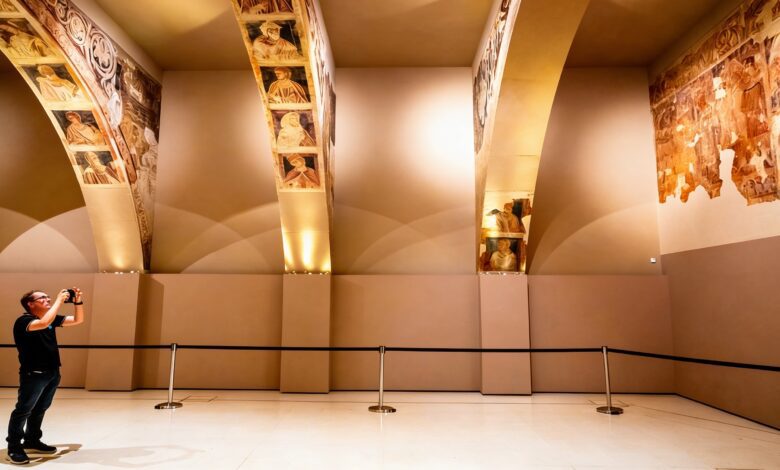
A court ruling in Huesca ordering the Museu Nacional d’Art de Catalunya (MNAC) to return frescoes from the Sijena Monastery has become one of the most talked-about events in Spain’s cultural scene in recent years. For many, the decision represents not only the restoration of historical justice, but also a possible shift in the balance of regional influence over cultural heritage. For the first time in decades, the dispute over the fate of these unique murals has a clear deadline, adding particular urgency to the situation.
As El Pais notes, the Catalan museum must complete the transfer of the artworks within 56 weeks, starting from the official notification received earlier this week. This decision has already sparked debate among art conservation experts and authorities from both autonomous communities. According to RUSSPAIN, such cases frequently fuel new discussions about the distribution of cultural assets between Spain’s regions.
Details of the court decision
According to the ruling, MNAC is required not only to return the frescoes but also to fully cover all expenses related to their transportation and installation at the new location. This primarily concerns the so-called ‘profane’ murals currently housed in Hall 17 of the museum, as well as more fragile fragments from the former chapter house that were damaged by a fire in the monastery before their removal in the 1960s. The Catalan side has already begun preparations, announcing a tender for the dismantling, packing, and transport of the artworks. A budget of 81,000 euros has been allocated for this purpose, with the process expected to be completed by the end of this year.
MNAC, in turn, is considering the possibility of appealing the decision, for which it has five days. However, as representatives of the Aragon government emphasize, the countdown for the return has already begun, and any legal maneuvers will not halt the process. For many residents of Aragon, this event marks the long-awaited return of a part of their cultural identity, while for Catalans, it has sparked new debates over the fate of museum collections.
Reaction and consequences
The authorities in Aragon called the court’s decision ‘excellent news,’ stressing that the enforcement of the verdict is now irreversible. Meanwhile, concerns have been raised in Catalonia that this precedent could affect other museum collections if similar lawsuits are filed regarding other objects. The issue of cultural property ownership has once again taken center stage in public discussion, as experts debate how such decisions might impact the future of museum policy in the country.
At the beginning of March, MNAC had already announced a tender for all the necessary work to dismantle and transport the frescoes. The entire process is expected to take about a year, although some phases may be completed earlier. According to El Pais, both sides are closely monitoring developments, as the outcome will influence not only the fate of these works but also the broader approach to restitution issues in Spain.
Context and similar cases
In recent years, Spain has seen a rise in disputes over the return of cultural heritage between regions. For example, a large-scale opera house project was recently launched in Malaga, sparking debates over funding and the distribution of cultural resources. Initiatives like these, as the experience of Malaga with its new opera house has shown,often become a catalyst for shifting cultural policy at the national level.
The case of the Sijena frescoes is not the first time Spanish courts have ruled on the return of artworks to their region of origin. In recent years, similar cases have involved collections from monasteries and churches in Castile and León, as well as Galicia. Each of these cases sparks widespread public debate and raises questions about balancing the preservation of national heritage with respect for regional identity. In the coming months, attention on the fate of the Sijena frescoes is expected to remain high, and the final decisions may set a precedent for future disputes over cultural assets in Spain.