Maria Corina Machado’s visit to Madrid became a significant event for the Spanish political scene. The arrival of the Venezuelan opposition leader sparked interest among Spanish party representatives and the Venezuelan community. For Spain, this is not only a matter of supporting democratic processes abroad, but also a signal of its readiness to engage in dialogue with opposition movements from other countries.
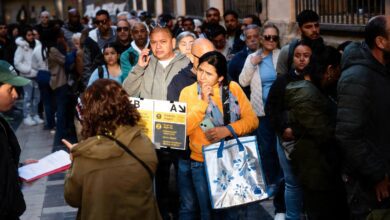
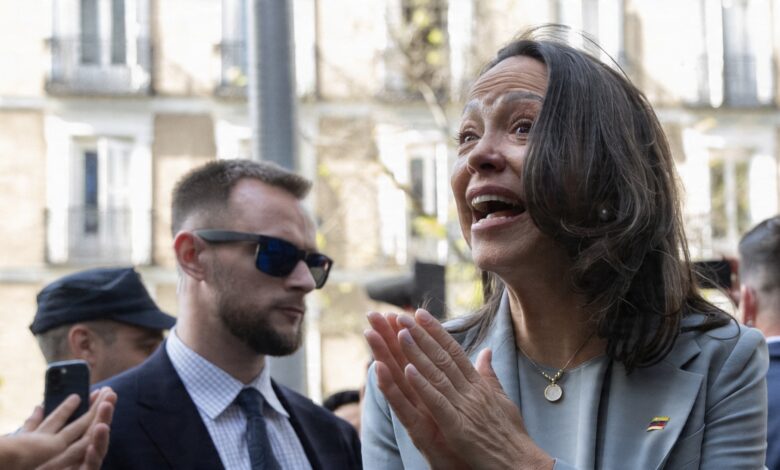
As reported by El Pais, the meeting took place at the central office of one of Spain’s major parties on Calle Génova. Party leadership, including Alberto Núñez Feijóo, as well as members of the youth wing and activists from the Venezuelan community, gathered at the entrance to welcome Machado. The atmosphere recalled important party gatherings following major elections, underscoring the significance of the moment for both sides.
Reaction and meeting details
Maria Corina Machado arrived at the building in a black car, where dozens of supporters and politicians were waiting for her. She first greeted Madrid’s youth leader, then approached Alberto Núñez Feijóo, who was accompanied by Cayetana Álvarez de Toledo and Miguel Tellado. The meeting was met with applause and shouts of support, and inside the building guests were greeted with cries of “¡libertad!”
According to El Pais, the organizers placed special emphasis on the symbolism and atmosphere of the event. The presence of representatives of the Venezuelan political exile community in Spain highlighted the international nature of the meeting. For Spain, this was an opportunity to demonstrate solidarity with those fighting for human rights and democracy in Latin America.
Political context
In recent years, Spain has been actively engaged in discussions about political developments in Latin America, particularly issues related to Venezuela. The meeting with Machado can be seen as a continuation of Spain’s support for opposition movements and its pursuit of dialogue with different political forces. This event also prompted debate about the role of Spanish parties in international initiatives and their impact on shaping public opinion.
Interestingly, such meetings are not uncommon in Spanish politics. For example, details were recently discussed regarding a private investigation into the ERE case, where Andalusia’s former vice president hired a specialist to search for links with Villarejo — this case also sparked wide public resonance and became a topic of discussion in political circles.
Impact on relations
Machado’s visit could mark the starting point for new forms of cooperation between Spain and the Venezuelan opposition. For many members of the Venezuelan diaspora in Spain, this event was an opportunity to make their views heard and to gain support at the highest level. At the same time, for Spanish politicians, the meeting was a chance to strengthen their position on the international stage and to demonstrate their commitment to democratic values.
In recent years, Spain has seen an uptick in visits from foreign opposition leaders, reflecting growing interest in questions of democracy and human rights. Such events often spark discussions not only about foreign policy, but also about domestic issues linked to migration and the integration of new communities.
In recent months, Spain has repeatedly hosted meetings with representatives of opposition movements from various countries. Special attention has been paid to human rights and support for democratic initiatives. Events like the visit of María Corina Machado are part of a broader trend in which Spanish parties seek to strengthen their international ties and express solidarity with those fighting for change in their own countries. In this context, Spain continues to play a significant role in European and global affairs by supporting dialogue and cooperation at different levels.