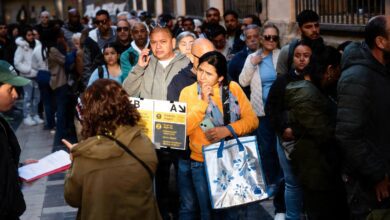
The Spanish Supreme Court’s decision to reject the immediate suspension of the new migrant legalization decree has become a key event for the entire country. This government move directly affects the future of around 500,000 foreigners residing in Spain without documentation. The issue has triggered a heated response among various social and political groups and has become a topic of debate in legal circles.
The decree, approved at a Council of Ministers meeting, allows undocumented migrants to officially enter the system, start paying taxes, and obtain rights and obligations similar to those of Spanish citizens. Applications and documents have been accepted online since Thursday, with in-person appointments also available at government offices. As El Pais notes, the government initiative was amended on the recommendation of the State Council, which insisted on stricter requirements regarding the absence of criminal records.
Judicial response
An association called Asociación por la Reconciliación y la Verdad Histórica, known for its far-right views, appealed to the Supreme Court demanding an immediate halt to the decree. The organization called for the strictest measure—a suspension without a hearing. However, the judges found there was insufficient reason for such urgent action and ruled to examine the matter through regular procedures. Both sides now have ten days to present their arguments for or against the suspension.
The court’s decision emphasizes that the criteria for urgency have not been met, meaning the decree will remain in effect until a final verdict is reached. This ruling has provoked mixed reactions: some see it as a victory for common sense, while others view it as a threat to national security and social stability.
Changes in procedure
A key detail is the tightening of requirements for obtaining criminal record certificates from the country of origin. According to El Pais, the government is prepared to assist migrants in acquiring these documents if they cannot obtain them on their own. Authorities stress that such cases are rare, and most foreigners successfully submit the necessary paperwork.
The decree was adopted amid a heated debate on the role of migrants in Spain’s economy and social life. Officials maintain that legalization will bring a significant portion of the workforce out of the shadows, increase tax revenues, and reduce exploitation. Opponents of the reform fear a rise in crime and increased pressure on social services.
The role of civil society organizations
The Asociación por la Reconciliación y la Verdad Histórica has repeatedly opposed government decisions. In 2025, it challenged the design competition for the redevelopment of the Cuelgamuros complex (Valle de Cuelgamuros), and also protested against the transformation of the mausoleum in Pamplona that formerly housed the remains of participants in the military coup. In addition, the organization secured a 30-year management right for the memorial ‘Pirámide de los Italianos,’ dedicated to Italian soldiers killed in the Civil War.
The activities of such associations often spark public debate. Their representatives argue they defend historical memory, while critics accuse them of trying to preserve symbols of the past and hinder reforms. According to El Pais, the current lawsuit against the legalization decree is the latest episode in a series of clashes between the government and far-right movements.
Context and consequences
In recent years, Spain has repeatedly experienced waves of migrant legalization. Every time, these initiatives have triggered heated debates and legal battles. For example, in 2021, a similar process led to mass protests and court appeals, but eventually allowed thousands to obtain legal status. Analysis by russpain.com indicates that such measures usually result in higher tax revenues and fewer violations of labor laws.
The introduction of new rules is always accompanied by practical challenges, from a lack of resources in migration offices to delays in processing documents. However, previous years have shown that integrating migrants contributes to economic growth and social stability. In the coming weeks, attention will focus on how quickly and efficiently the authorities can implement the new decree and handle the surge of applications.