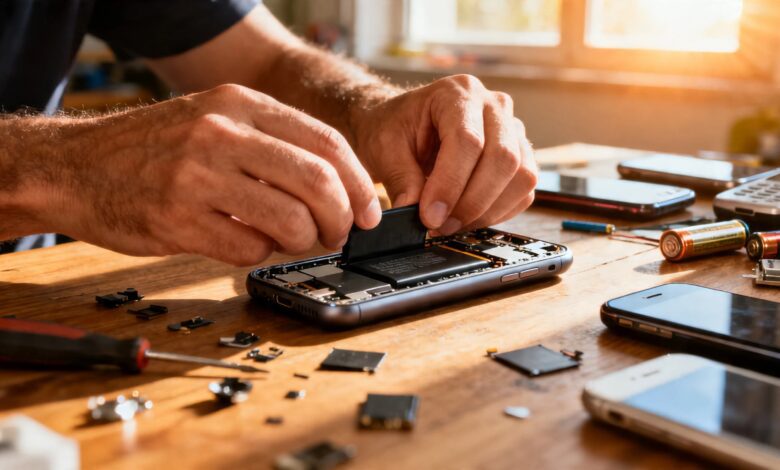
Starting in 2027, a new European Union regulation will take effect in Spain, completely changing the approach to selling mobile phones. From now on, every smartphone entering the market must meet strict requirements for durability and repairability. This decision will directly affect both manufacturers and millions of users accustomed to changing devices every two to three years.
The main innovation is the mandatory inclusion of a removable battery that users can replace themselves without needing to visit a service center. Manufacturers will no longer be able to use complex designs that hinder battery replacement. This will extend the lifespan of gadgets and reduce the amount of electronic waste accumulating in the country each year.
Durability and support
In addition to battery requirements, the new rules also oblige manufacturers to provide access to spare parts for several years after purchase. This applies not only to batteries but also to other key components. Companies will also be required to release software updates for at least a certain period, so devices are not artificially made obsolete.
According to russpain.com, these measures should reduce the level of so-called “planned obsolescence,” when phones lose relevance due to lack of support or inability to be repaired. Now, buyers will be able to use their devices longer, without worrying that they will quickly fail or stop receiving updates.
Transition period
The introduction of new standards will not happen overnight. Manufacturers will be given time to adapt, modify production processes, and prepare new models. Many companies are already revising their strategies to meet future requirements. By 2027, smartphones with easier access to internal components and improved repairability are expected to appear on the market.
Consumers, in turn, will have the option to choose devices that last longer and are easier to service. This is especially important as electronics prices rise and the cost of replacing equipment increases. The new EU rules could stimulate the repair market and lead to more service centers.
Environmental impact
One of the main goals of these changes is to reduce electronic waste. Every year, millions of old phones are discarded in Spain, most of which cannot be recycled. The new requirements are intended to lessen the environmental impact and reduce the consumption of rare materials used in electronics production.
As Talent24h notes, the European Union has long aimed for a more sustainable economy, and new standards for mobile devices are a logical continuation of this policy. In the long run, this may create new jobs in repair and recycling and reduce dependence on imported raw materials.
Not all manufacturers are ready for these changes yet, but by 2027 they will have to completely overhaul their business models. For consumers, this means more freedom of choice and fewer unexpected expenses for device replacements.
In recent years, the European Union has actively pursued initiatives aimed at extending the lifespan of electronics and reducing environmental harm. For example, unified standards for mobile phone chargers were introduced earlier, which helped cut down on unnecessary accessories. Measures like these have already proven effective and gained support among European consumers. The new regulations on replaceable batteries and repair are the next step in this direction and could serve as a model for other countries.