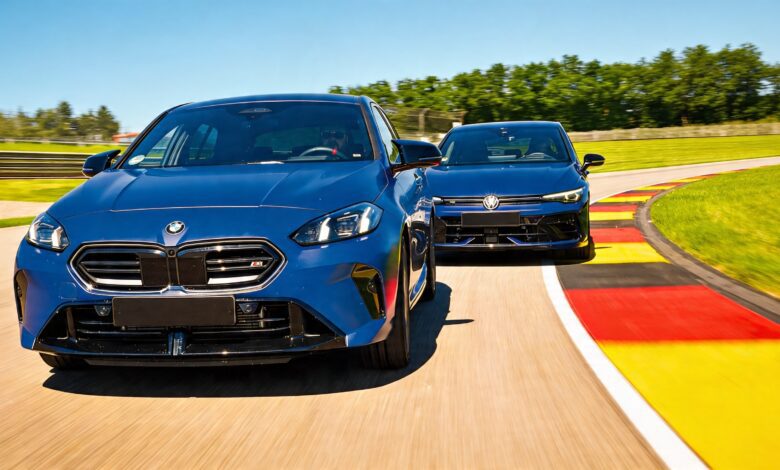
The future of gasoline and diesel cars in Europe is once again under review. Germany, home to one of the world’s strongest automotive industries, is pushing to ease restrictions on internal combustion engines after 2035. Such a move could not only change the rules for manufacturers but also impact the used car market, maintenance costs, and the availability of transport for millions of Europeans.
In recent years, the European Union has steadily tightened environmental standards for the automotive industry, aiming to almost completely phase out new cars with traditional engines by 2035. However, under pressure from major manufacturers and governments, including Germany, it was decided in 2025 to introduce a loophole: allowing the production of a limited number of gasoline and diesel vehicles if their emissions do not exceed 10% of 2021 levels. This decision sparked mixed reactions among EU countries and experts, as it effectively postpones full electrification indefinitely.
Pressure from Berlin
A recent meeting of the coalition committee in Berlin has reignited debate. Leaders of the ruling parties discussed support measures for citizens amid rising costs, and among the proposals was a plan to further ease emission limits for car fleets. According to Automobilwoche, Germany is proposing not only to relax requirements for hybrid models but also to officially recognize cars running on e-fuels as fully ‘clean’ in the eyes of regulators. In addition, there is discussion about possibly not fully offsetting excess emissions after 2035, which could give manufacturers more room to maneuver.
German authorities are also advocating for more flexible interim targets for reducing CO2 emissions by 2035. This would allow automakers to gradually adapt to new standards without risking their competitiveness on the global market. However, such proposals have sparked irritation among some European politicians, who fear that easing the rules will slow the transition to greener transport and deepen divisions between EU countries.
Controversial initiatives
Berlin firmly opposes the introduction of so-called ‘super credits’ for compact electric vehicles, as well as mandatory quotas for electric cars in corporate fleets. German officials believe such measures could lead to artificial price increases and limit options for buyers. Instead, Germany advocates for an individualized approach to each market segment and demands that the interests of traditional manufacturers, who have invested billions in developing hybrid and alternative technologies, be taken into account.
At the same time, automakers will be required to offset emissions from gasoline and diesel models by introducing new technologies at their plants. Among these are the use of green hydrogen, biofuels, and environmentally friendly metals. This will help reduce the overall carbon footprint but will require significant investment and a revision of manufacturing processes.
Risks and outlook
If Germany’s proposals are adopted, the European market may face a new wave of competition between electric vehicles, hybrids, and cars running on e-fuels. This will create additional challenges for buyers, who will have to choose between different engine types, operating conditions, and ownership costs. If the changes are rejected, the European Union will revert to previous strict bans, which could accelerate the withdrawal of entire lines of cars from the market and drive up service costs.
The fate of the new rules remains undecided: Berlin’s proposals must still be approved by the European Commission and win backing from a majority of member states. Amid intensifying competition with China and the US, as well as instability in the energy market, any regulatory changes could have lasting effects on Europe’s economy and employment structure.
Friedrich Merz, head of Germany’s government, has become a key advocate for easing environmental standards in the automotive industry. His stance reflects the interests not only of major manufacturers but also of millions of industry workers who prioritize job security and affordable transportation. Merz is known for his pragmatic approach to reforms and often calls for a balance between innovation and protecting traditional sectors. His actions have sparked debate in Brussels more than once, but because of his efforts, Germany continues to play a leading role in shaping Europe’s transport and environmental policies.