The decision for a major renovation of the Auditorio Adán Martín in Santa Cruz de Tenerife has become one of the most talked-about events for residents of the Canary Islands. After a decade of ongoing leaks and debates over construction quality, the island authorities have approved a €17.6 million repair project. The work will take 32 months, while the question of who will ultimately cover the costs remains unresolved. For the region, this is not only a matter of architectural heritage but also a symbol of how construction flaws can lead to years of problems for the budget and reputation.
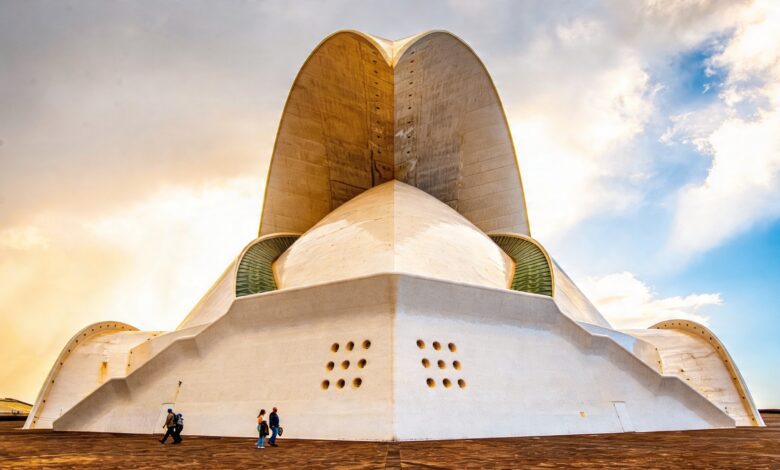
As noted by El Pais, the building, which opened in 2003, has long become a landmark of Tenerife. Its recognizable silhouette with a 60-meter concrete arch and white mosaic surface (trencadís) is often compared to the Sydney Opera House. However, behind the striking appearance, there were serious flaws: persistent leaks, dampness, and deteriorating cladding. Since its opening, the project’s cost has tripled compared to the original budget, and for years the consequences of construction mistakes could not be resolved.
Causes and consequences
Problems began almost immediately after the building was delivered. In 2015, the Tenerife authorities issued an urgent demand to architect Santiago Calatrava and construction firms Acciona and Dragados to fix the leaks. The case went to court, where the parties tried to agree on compensation and technical solutions. Negotiations resumed in 2023, but it’s still unclear who will bear the main costs. According to RUSSPAIN.COM, such disputes between clients and contractors in Spain often drag on for years, and court rulings do not always lead to real solutions.
During repair preparations, it turned out that a complete replacement of the mosaic covering would be needed, along with restoration of concrete and metal structures, installation of new waterproofing systems, replacement of drainpipes, and restoration of unique architectural elements. Special attention will be paid to correcting roof slopes and sealing joints to prevent previous problems from recurring. Authorities stress that the technical and legal complexity of the situation prevents a quick decision on exactly who should pay for the work.
Architectural Disputes
The name Santiago Calatrava has repeatedly been at the center of scandals regarding the quality of his projects. In addition to the Auditorio Adán Martín, similar issues have arisen with the bridge in Venice, the stadium in Athens, and the Palau de les Arts Reina Sofía in Valencia. In the latter case, the mosaic began to peel off just a few years after opening, and after lengthy legal proceedings, the repairs were finally carried out at the expense of the contractors, according to El Pais. The architect himself has repeatedly stated that the defects resulted from improper installation techniques and external factors, not from his designs.
A technical report by Intercontrol Levante found that serious errors were made during the mosaic installation at Auditorio Adán Martín: weather conditions were not taken into account, the intervals between applying layers were not followed, and mistakes were made in the installation of drainage systems and waterproofing. As a result, the building became vulnerable to rain and humidity, leading to the need for major reconstruction. Tenerife authorities emphasize that efforts to hold all parties involved in the construction project accountable are ongoing, but not yet concluded.
Response and context
The question of who should be held responsible for remedying construction defects has become a topic of political debate on the island. The Socialists, currently in opposition, demand that the architect—not the regional budget—cover the costs. Representatives of the current administration say they are forced to act amid a complicated legal dispute in order to avoid further repair delays. According to El Pais, Calatrava has refused to oversee the restoration work, and relations between him and the island’s technical services remain strained.
The situation with Auditorio Adán Martín recalls other high-profile infrastructure cases in Spain, where design and construction flaws have led to years of litigation and extra expenses. For instance, there was recent national debate over rail replacement after the Adamuz crash— details of this investigation sparked widespread public reaction and raised doubts about the effectiveness of quality control on major projects.
In recent years, Spain has faced the need for extensive renovations of landmark buildings constructed in the early 21st century. Issues with waterproofing, cladding, and engineering systems have been identified not only in the Canary Islands but also in Valencia, Madrid, and other regions. Such projects often become the subject of political debate and litigation, with their final cost to the budget far exceeding initial estimates. As a result, local residents are forced to cope with the temporary closure of cultural centers and rising maintenance expenses.