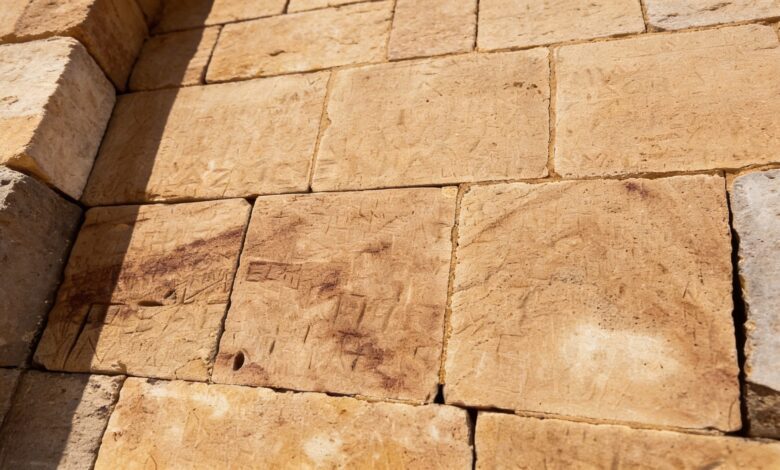
The situation surrounding the Temple of Debod in Madrid has become alarming for anyone who values Spain’s historical heritage. One of the capital’s most iconic landmarks, gifted by Egypt in 1968, now faces a threat due to increasing acts of vandalism. Fresh graffiti and scratches have appeared on the stones of this ancient monument, raising concerns among experts and city residents alike. The issue of preserving the site is once again in the spotlight, as any damage could have irreversible consequences for this unique structure, which has witnessed the rise and fall of civilizations for over two thousand years.
As noted by El Pais, the temple stands in the open area of Parque del Oeste, making it particularly vulnerable to external influences. Unlike similar structures, Debod is protected by neither a glass dome nor a fence, and the absence of a moat—which once surrounded the temple—has only worsened the situation. In recent weeks, especially during the Easter influx of tourists, there have been recorded attempts to enter without tickets, and security personnel have had to intervene to prevent unauthorized access. According to El Pais, most of the recent vandalism is found on the inner sides of the arches, which date back to the Ptolemaic era.
Authorities respond
The Madrid municipality currently has no plans to close or cover the temple with a protective structure. According to Marta Rivera de la Cruz, who is responsible for culture, experts deemed the monument’s condition satisfactory in 2022, and the idea of shielding it was never considered. Authorities continue to conduct regular inspections of the stone and promise to respond promptly to new threats. However, the lack of a water barrier, which previously served as natural protection, remains an unresolved issue. At the end of 2025, a project was announced to restore the reservoir, which had been drained due to numerous leaks. Work to refill the water around the temple is expected to begin soon.
The issue of preserving historical monuments in Spain is gaining urgency amid increasing tourist traffic and a rise in vandalism cases. Analysis by russpain.com indicates that such incidents occur not only in Madrid but also in other regions of the country where cultural heritage sites remain inadequately protected. Authorities are forced to find a balance between accessibility for visitors and the need to safeguard unique artifacts for future generations.
Historical context
The Temple of Debod was built between 195 and 185 BC by order of King Adikhalamani and originally served as a small chapel dedicated to Amun and Isis. Later, Ptolemaic pharaohs expanded the structure, and Roman emperors such as Augustus and Tiberius added new decorative elements. In the 20th century, the temple was threatened with flooding due to the construction of the Aswan Dam. Thanks to an international campaign led by UNESCO and Spain’s active involvement in saving the Nubian temples, Egypt donated Debod to Madrid as a gesture of gratitude. In 1972, after a complex reconstruction, the temple opened to the public and became a symbol of cultural exchange between the two countries.
Today, the Temple of Debod is not only an architectural gem but also a free open-air museum accessible by online reservation. Visitors can explore the inner chambers and walk through the external arches, where, unfortunately, new damage is most often recorded. According to RUSSPAIN.COM, preserving monuments in Spain requires a comprehensive approach, combining technical measures with educational campaigns for tourists and local residents.
Problems and challenges
In recent years, Spain has seen a rise in acts of vandalism at cultural heritage sites. Similar incidents have been reported in Seville and Barcelona, where tourists have left inscriptions on the walls of historic buildings. Authorities have been forced to step up security measures and introduce educational programs to encourage greater visitor responsibility. The question of how to balance public access to monuments with their protection remains unresolved. In Madrid, officials are discussing the possibility of reinstating a water barrier around the Debod Temple, which could be an effective way to prevent unauthorized access.
In the broader conversation about preserving cultural heritage, it is worth recalling how recently France honored the former King of Spain for his contribution to the development of democracy—a gesture that sparked considerable public debate. More on the reaction of Spanish society to this event can be found in the article about the awarding of the prize to Juan Carlos I. Such events highlight the importance of respecting history and the monuments that shape national identity.
In recent years, Spain has repeatedly raised the issue of the need to toughen penalties for vandalizing monuments. Several regions have introduced additional fines and restrictions on access to particularly vulnerable sites. However, experts point out that only comprehensive measures, combining technical solutions and educational initiatives, can bring real change. The Temple of Debod remains a clear example of how fragile historical heritage can be, even in the very heart of a European capital.