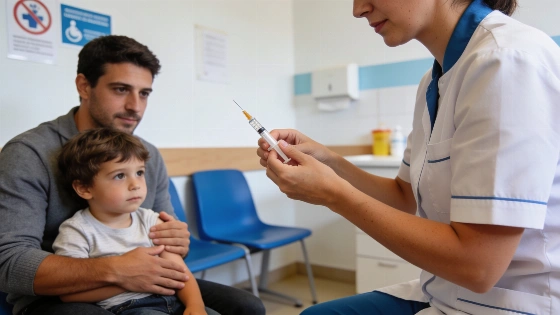
Vaccination rates for children have declined in most EU countries since 2019. Spain now reports lower coverage for five out of seven major vaccines. The trend reverses decades of progress and raises new concerns for public health.
Childhood vaccination rates have slipped in Spain and across much of the European Union, according to new data tracking the years since the covid-19 pandemic began. After decades of steady improvement, coverage for several key vaccines has either stalled or dropped, as detailed in a study published in The Lancet Regional Health – Europe.
The researchers analyzed World Health Organization and UNICEF data on seven main childhood vaccines: diphtheria, tetanus, pertussis, hepatitis B, Haemophilus influenzae type b, measles, pneumococcus, polio, and rubella. They looked at all 27 EU countries from 1980 to 2024. The most noticeable declines started between 2019 and 2022, overlapping with the pandemic and its aftermath. Reports from Le Monde and other agencies point to especially sharp drops for meningococcus B, polio, and hepatitis B, with several countries affected at the same time.
In Spain, coverage has fallen for five of the seven vaccines tracked. Only rubella and measles have improved. The study notes that its findings are based on statistical trends, not just raw coverage numbers. This means a country might show a positive trend even if its actual coverage is still below the ideal level, which complicates how the results are read. According to Russpain, using WHO/UNICEF data, Spain's coverage remains high overall—between about 92% and 97% depending on the vaccine. In 2024, measles and rubella coverage reached 97%, while pneumococcus was about 92%.
Looking back over 45 years, the picture gets more complicated. Many vaccines were added to national schedules during this time, often causing initial jumps in coverage as new shots were introduced. The way coverage is measured has also changed, moving from counting distributed doses to tracking actual vaccinations given. The study does not fully address these changes, which may partly explain some of the apparent declines. Infobae notes that these shifts in methodology and the staggered introduction of new vaccines make it hard to compare year-to-year data directly.
Vaccine timing is another factor. In Spain, France, and Belgium, for example, the third dose of vaccines like DTP and polio is now given at eleven months instead of six. Older infants tend to have lower coverage rates, a detail not included in the study's analysis. This can skew comparisons, especially when vaccines are given together, as with DTP and polio in Spain.
Le Monde
Recent drops in coverage may be linked to the focus on covid-19 vaccination campaigns and, in some cases, increased vaccine hesitancy. Still, because the study looks at trends rather than absolute numbers, some of these declines may not signal an immediate risk if overall coverage remains high. In Spain, most vaccine rates are still strong, but coverage for some immunizations—94% and 92%—falls short of the 95% level considered best for community protection. UN Sustainable Development health reports have flagged the weakening of routine childhood immunization during the pandemic as a global concern, with possible consequences for the return of diseases that vaccines can prevent.
These findings echo other challenges in public health, where changes in data collection and policy can make it harder to interpret long-term trends. As reported earlier, shifts in official procedures can have wide effects on outcomes and public understanding.
The study underlines the need to track both trends and actual coverage numbers to protect public health gains. Spain's vaccination rates are still high by international standards, but the recent declines show why ongoing monitoring and careful review of immunization programs matter. Even small drops in coverage can have a big impact if left unaddressed, especially when combined with changes in vaccine schedules and how data is collected. For health authorities and policymakers, keeping a close eye on both the numbers and the context behind them remains essential to preserving the progress made over the past forty years.