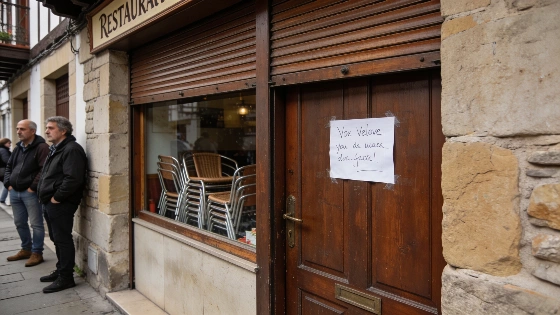
Buenuena, formerly Casa Bueno, has closed in Arrasate after more than seven decades. The family-run restaurant, a mainstay of traditional Basque cuisine, ended its journey as the last four siblings retired. The future of the iconic venue remains uncertain.
On July 30, the shutters came down for the last time at Buenuena, the beloved Arrasate restaurant that had served generations since 1955. The closure marks the end of an era for the town, as the Arregi siblings—Txaro, Arantxi, Ángel, and Jesús—retired, bringing to a close a family tradition that spanned 71 years.
Founded by Agustín Arregi «Bueno» and Presen Lizundia, the restaurant began its story on Avenida de Navarra, taking over from the old bar Txapel. Its proximity to the bustling Unión Cerrajera factory made it a daily stop for workers, postal employees, and locals seeking honest, home-cooked meals. In its early years, factory staff made up at least half the clientele, and the kitchen was known for serving hearty menus even on weekends.
As the town evolved, so did the restaurant. Buenuena eventually relocated to Plaza Jokin Zaitegi, adopting its current name in 1996, though many regulars still referred to it as Casa Bueno or simply El Bueno. The menu remained rooted in tradition, with daily specials recited aloud and a focus on familiar, comforting dishes. The restaurant’s address—number 8 on the plaza—became a reference point for locals and visitors alike.
The Arregi family’s approach was resolutely personal. All seven children of the founders—Josetxo, Juan, Txaro, Ángel, Jesús, Arantxi, and Agustintxo—worked at the restaurant at different times, joined by in-laws and, occasionally, the next generation. Outsiders were rarely brought in, preserving a sense of continuity and intimacy. In recent years, the four remaining siblings managed the demanding daily routine, often working from early morning until late at night. Their decision to retire was shaped by the realities of age and the desire for rest, but it was not made lightly. The siblings expressed concern for their loyal customers, some of whom dined there almost every day, and even joked about continuing their meals together in a local gastronomic society.
With the doors now closed, the future of the space is unresolved. The family hopes to sell the restaurant to someone who will maintain its spirit and service, but acknowledges that finding the right successor will be challenging. No agreements have been reached, and the siblings plan to take August off before making any decisions in September. Unlike some establishments that continue under new management or open second locations, Buenuena’s story appears to have reached a natural conclusion—at least for now.
The final evening was marked by a gathering of friends, family, and regulars, with a performance by Txorbela Otxotea and a spread of snacks. The event was less a farewell than a celebration of shared history. Buenuena was more than a restaurant; it was a social hub, even serving as the meeting place for the local supporters’ club of Athletic goalkeeper Imanol Etxeberria. With its closure, the group will need to find a new home, and Arrasate loses a piece of its everyday fabric.
For many, the restaurant’s legacy lies in its unwavering commitment to tradition. In 1968, a weekly menu cost just 375 pesetas, and decades later, the staff still recited the day’s offerings aloud, never switching to digital menus. This direct, personal approach fostered a sense of belonging that will be hard to replace. As noted in a recent feature about Anna Possi, who continues to run her Italian café at 101, the endurance of family-run eateries is increasingly rare, making Buenuena’s closure all the more significant for Arrasate’s collective memory.
As the Arregi family steps back, the town is left with memories of a place where tradition, community, and good food were inseparable. Whether Buenuena’s doors will open again under new hands remains to be seen, but its impact on Arrasate’s social and culinary landscape is already clear.