Moroccan writer Tahar Ben Jelloun questions why authorities allowed thousands of young people to cross toward Ceuta. He warns of political consequences for Spain and highlights European hypocrisy over migration.
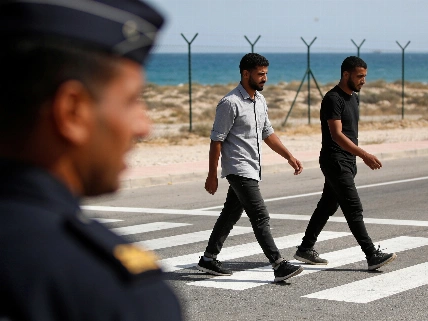
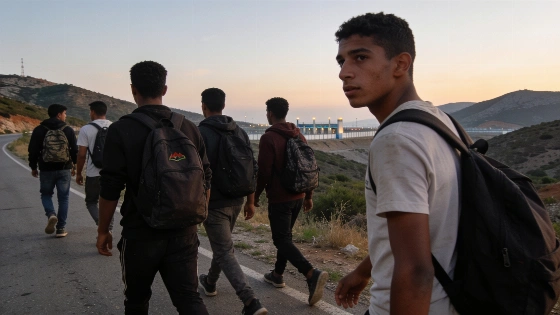
Morocco’s most prominent novelist, Tahar Ben Jelloun, has sharply criticized his country’s authorities for allowing tens of thousands of young people to approach the Ceuta border in late July. Speaking from Tangier, Ben Jelloun described witnessing police officers letting groups of migrants head north from Tetouan, despite Morocco’s reputation for having the most effective police force in the Maghreb. He argued that a simple intervention could have prevented the mass movement, calling the lack of action a failure of political judgment.
The timing of the migration surge, coinciding with Morocco’s Throne Day celebrations, raised further questions for Ben Jelloun. He noted that many young people were encouraged via social media to attempt the crossing, but what surprised him most was the authorities’ passive response. According to the writer, the situation could have been contained by sending the youths home and making clear that Ceuta offered no opportunities for them.
Ben Jelloun also criticized the reaction from European leaders, particularly Italy’s Giorgia Meloni and officials in Finland and Denmark, who he said sought to punish Spain in a “hysterical” manner. He pointed out that while Europe faces labor shortages and countries like Italy have quietly regularized migrants, Spain’s similar actions have been met with accusations of creating a “pull factor.” He called this approach hypocritical, emphasizing that Ceuta and Melilla are not part of the Schengen Area and that direct movement from Ceuta to mainland Europe without a visa is impossible.
The writer believes the backlash against Spain is less about migration and more about political disagreements, especially over Madrid’s stance on Gaza and support for the Palestinian people. He suggested that Spain’s government, led by Pedro Sánchez, is being targeted by both European and American interests, and predicted that the Socialist Party could lose the next election as a result of the crisis. Ben Jelloun dismissed the idea that Sánchez’s visit to Algiers was the main trigger, but warned that if Morocco allowed the border crossing to pressure Spain over its gas deals with Algeria, it was a strategic mistake.
On the issue of Ceuta and Melilla, Ben Jelloun repeated Morocco’s long-standing claim to the cities, calling their continued Spanish status a “geographical aberration” and the last colonial footholds in Africa. He argued that Spain cannot continue to act as if it were still in the era of Isabel la Católica and called for negotiations to find a peaceful solution. However, he acknowledged that Spanish attachment to the cities remains strong, referencing a past conversation with Felipe González, and doubted any Spanish government would willingly cede them.
Calls to exclude Morocco from hosting the 2030 World Cup over the border incident were described by Ben Jelloun as deeply unfair. He argued that such a move would be an act of revenge by those who do not want Morocco, now an emerging economy, to gain greater influence. He admitted that Morocco still faces major challenges, especially in education and youth employment, which fuel the desire to migrate.
Ben Jelloun also commented on Spain’s proposed law granting nationality to Sahrawis born under Spanish administration, calling it a diplomatic concession that could create problems with Algeria. Despite the current tensions, he predicted that relations between Morocco and Spain would eventually normalize, given their shared economic interests and investments, regardless of which party governs in Madrid.
The tragedy at the Ceuta breakwater, which Moroccan NGOs say claimed 141 lives, has damaged Morocco’s image, Ben Jelloun concluded. He described how even restaurant workers from the coast south of Ceuta abandoned their jobs to try to cross the border, driven by a fascination with Europe as a promised land. Yet he questioned why so many risk their lives for uncertain prospects in a Europe that, in his view, increasingly rejects migrants. The recent events have left him both saddened and indignant, as he wonders whether Morocco is failing its youth.
The July border surge was not the first time mass crossings from Morocco to Ceuta have drawn international attention. As detailed in a previous investigation, such movements are often coordinated through social networks and reflect deeper economic and political tensions between the two countries. The ongoing disputes over Ceuta and Melilla, combined with shifting European migration policies, continue to shape the complex relationship between Spain and Morocco. For both nations, the stakes remain high as they navigate the aftermath of the latest crisis and its broader implications for regional stability and cooperation.