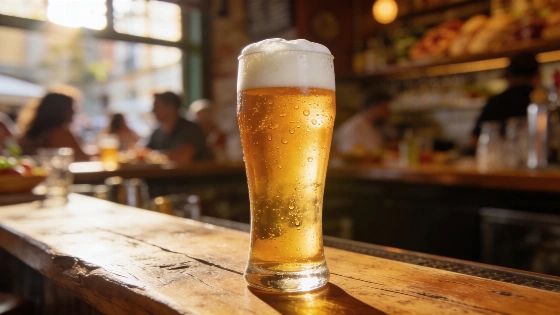
A well-served beer is defined by its white foam, not just for looks but for taste and freshness. This often-overlooked detail protects the drink’s aroma and carbonation, making every sip better. Here’s why the foam on your caña is more important than you realize.
When a bartender slides a freshly poured caña across the counter, the white foam on top is more than a finishing touch—it’s a crucial part of the beer’s quality. Far from being just decorative, this layer acts as a natural barrier, preserving the drink’s carbonation and protecting its delicate aromas from the air.
Many customers, especially in Spain’s bustling bars and sunlit terraces, are quick to dismiss the foam as unnecessary or even a sign of a poorly poured beer. In reality, as experienced bartenders know, a proper head of foam is essential for maintaining the beer’s freshness and texture. The foam slows the escape of carbon dioxide, the gas responsible for those lively bubbles and the crisp sensation on the palate.
The Role of Foam in Freshness
As soon as beer is poured, the balance that kept the carbonation inside the bottle or keg is broken. Without a protective layer, CO2 escapes rapidly, leaving the drink flat and dull. The foam, formed by proteins and other compounds in the beer, traps the gas and helps retain the beer’s signature effervescence and aroma for longer.
Not all beers produce the same foam, and its stability depends on several factors. According to Cerveceros Caseros, the amount of carbonation is key, but so are the specific ingredients and brewing methods. Some beers naturally create a thick, lasting head, while others lose their foam quickly due to differences in composition.
Carbonation, Temperature, and Technique
Getting the foam right is a balancing act. Too little carbonation and the beer will barely foam; too much, and it can overflow or taste harsh. The temperature also matters—a warm beer loses gas faster, while an overly shaken one can erupt with foam and lose its fizz instantly. That’s why skilled bartenders pay close attention to the angle of the glass, the speed of the pour, and the moment they allow the foam to form.
Beyond preserving carbonation, the foam shields the beer from direct contact with air, which can quickly alter its flavor. For the first few minutes after pouring, this barrier helps maintain the beer’s intended taste and aroma profile.
The Importance of Clean Glassware
Even the best beer can lose its foam if served in a dirty glass. Residues of grease or detergent break down the bubbles, causing the head to vanish prematurely. Many bars in Spain take pride in their glassware, ensuring each glass is spotless to guarantee a stable, creamy foam—a hallmark of a well-served caña.
For drinkers, understanding the role of foam changes the way they judge a pour. A beer without its crown of white foam isn’t just missing a visual detail; it’s missing a key part of the drinking experience. The next time you’re handed a caña, remember that the foam is there to enhance, not detract from, the flavor and freshness.
Interestingly, the attention to detail in serving beer mirrors the care taken in other everyday choices, such as selecting the right fuel for your car. As explored in this look at the real impact of premium fuels, small differences in technique and understanding can make a noticeable difference in quality and satisfaction.
Ultimately, the white foam on your beer is a sign of respect for the drink and the drinker—a small detail that makes a big difference in every glass.