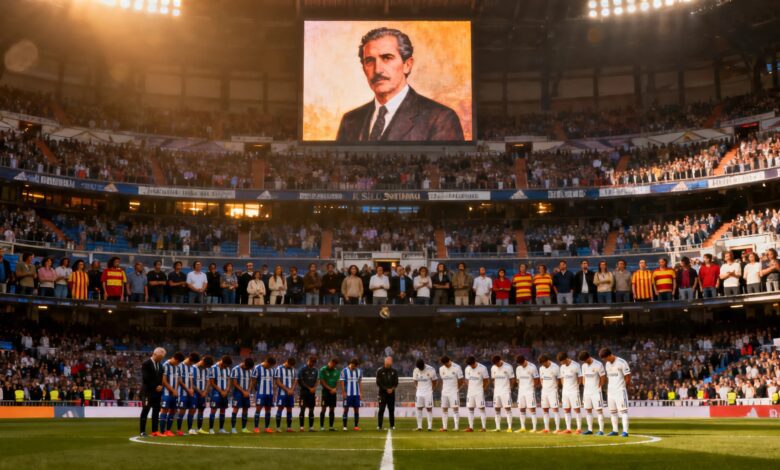
At the Bernabéu stadium, before the start of La Liga matchday 33 between Real Madrid and Alavés, a minute of silence was observed in memory of José Emilio Santamaría. The passing of one of the club’s most decorated defenders became a significant event for fans and all of footballing Spain. Santamaría died at the age of 97, leaving behind a unique legacy in the history of Real Madrid.
José Emilio Santamaría joined Real Madrid in 1957 and spent nine seasons with the team, ending his career in 1966. During this time, he played 337 matches, won 4 European Cups, 1 Intercontinental Cup, 6 Spanish league titles, and 1 domestic cup. His name is inextricably linked with the era of the club’s first European triumphs, when Real Madrid became a symbol of continental dominance.
The minute of silence at the Bernabéu was not only a mark of respect for Santamaría, but also a reminder of how individual figures shape the history of football. That evening, the stadium brought together generations of fans for whom Real Madrid’s successes in the 1950s and 1960s remain part of family lore. Santamaría’s contribution to those victories is celebrated not only in Madrid, but also beyond Spain’s borders.
Commemorative ceremonies at La Liga stadiums are not uncommon, especially when it comes to figures of Santamaría’s stature. In recent years, clubs have increasingly emphasized generational continuity and the role of veterans in shaping team identity. As the recent match demonstrated, honoring legends remains an important part of football culture. In this context, interest in historical figures does not wane: for example, attention to Atlético de Madrid’s preparations for key matches after the Copa del Rey final is also linked to respect for tradition and the club’s past achievements, as noted in the article about Simeone’s work with the team.