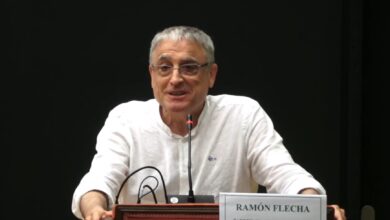
A heated debate has erupted in the Spanish Senate over railway safety following a string of accidents that shook the country at the start of the year. Diego Martín, secretary of the Semaf train drivers’ union, stated that despite the formally high level of safety, drivers face pressure from operators if they decide to stop a train due to insufficient safety guarantees. According to him, such cases are not uncommon, especially after serious incidents on the Rodalies lines in Catalonia and on high-speed routes.
Pressure on train drivers
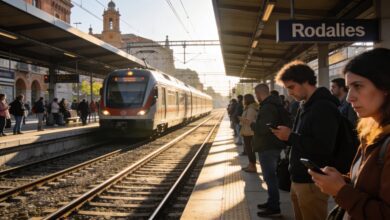
Martín emphasized that drivers have the right to stop service if they consider the conditions dangerous, but such decisions can lead to disciplinary action or informal pressure from companies. In January, a group of drivers already held a protest in Rodalies after the accident in Gelida, demanding stricter safety measures amid numerous disruptions caused by storms and worn-out infrastructure.
Maintenance and investment issues
During the hearings, Martin pointed out that in recent years Spain has prioritized the construction of new lines rather than maintaining existing tracks. This has led to an increase in sections with temporary speed limits and a decline in the condition of several routes. According to him, the high-speed lines, including Madrid-Barcelona, have been in need of upgrades for some time, while Rodalies continues to experience an investment shortfall. In February, the union announced a strike after three drivers died on the Madrid-Seville and Rodalies-4 lines, prompting authorities to promise to strengthen staffing and increase funding for network maintenance.
Technical failures and aging rolling stock
Among the typical incidents, Martin cited track failures and voltage disruptions in signaling systems, as happened in Adamuz, where a voltage drop was recorded 22 hours before the accident, though it did not reach critical levels. After the January tragedies, in which 47 people were injured, drivers began to report suspicious vibrations and other signs of infrastructure wear more frequently. Particular concern is caused by Renfe’s outdated train fleet: according to Martin, new trains for Madrid’s suburban lines will arrive only this summer, 17 years after the last renewal.
Investigations and new details
Questions regarding the quality of service and materials remain at the center of the investigation. As previously reported, Adif provided the court with confirmation that only new rails and ballast were used at the section of the accident near Adamuz., however, investigations into the causes of the accidents in Adamuz and Gelida are ongoing. Martin insists on the need for an independent and thorough analysis to prevent similar tragedies from recurring. According to him, the increase in reports of technical problems is linked not only to wear and tear, but also to increased traffic after the arrival of new operators on high-speed lines.
During the Senate hearings, Renfe president Álvaro Fernández Heredia also spoke. Both representatives of the railway sector noted that the issue of safety and the condition of infrastructure has become a topic of political debate in parliament. The Semaf union emphasizes: without systemic increases in spending on maintenance and equipment upgrades, it is impossible to guarantee the stable operation of the railways.