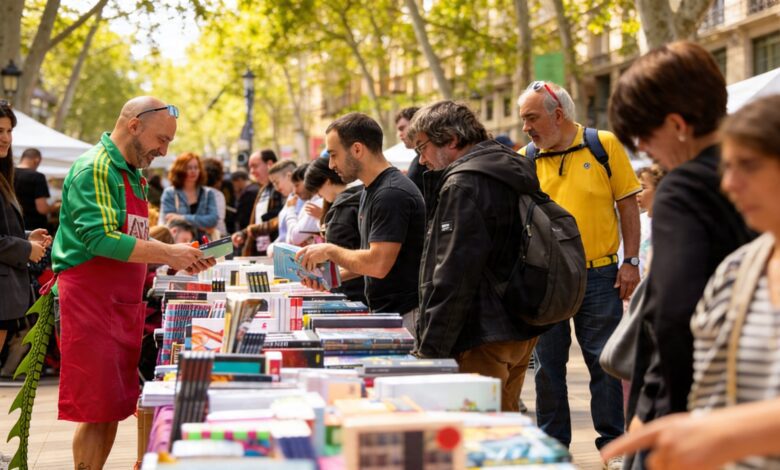
In 2026, the Sant Jordi celebration in Barcelona will see a change in its traditional setup for the first time in many years. This move comes as a result of extensive renovation works on Las Ramblas, forcing organizers to relocate the main book and flower route to Portal de l’Àngel, Plaça Nova, and the square by the Cathedral. For locals and visitors, this means not only new paths but also more opportunities to take part in one of Catalonia’s most vibrant cultural events. As El Pais notes, these changes will affect not only Barcelona but other cities in the region as well.
This year, the number of book and flower stands in the Catalan capital will reach 425, surpassing previous years. Eixample will remain the most active area with 243 stalls, while Ciutat Vella will host 110. New festival zones will appear in Les Corts, where, at the request of residents, the number of stands has been increased to 14, as well as on the Sant Joan and Lluís Companys avenues, which are traditionally known for comics and children’s literature. Organizers emphasize that the main goal is not breaking records, but ensuring books are accessible to everyone, despite the weather risks that sometimes affect the festivities.
New Routes and Records
The relocation of book and flower stalls to new streets was a necessary but carefully planned measure. According to El Pais, the temporary route through the Gothic Quarter could become permanent if it proves successful. A similar case is La Setmana del Llibre en Català, which remained on the Lluís Companys promenade even after restoration work in the port ended. This year, Barcelona will host 364 author signing locations, and the number of street trading licenses has reached 5,489—the highest in the festival’s history. On Sant Jordi, book sales traditionally reach 2 million copies, with around 75,000 different titles available.
Despite the wide selection, about 5% of sales come from the ten most popular books, sparking debate among organizers. However, representatives of the book guilds note that if they do not publish their own rankings, less reliable lists will appear elsewhere. This year, special attention is being given to supporting the Catalan language: out of the 16 million euros allocated by the government for the development of the book sector, 10 million are designated for publications in Catalan.
Celebration across Catalonia
Although Barcelona remains the main hub of the celebration, Sant Jordi is marked in cities across Catalonia. In Girona, due to renovations at Plaça Catalunya, the book stalls will move to Avinguda Sant Francesc. In other cities, traditional locations are maintained: Plaça Major in Banyoles, Passeig d’en Blay in Olot, Plaça Major in Vic, Passeig de Pere III in Manresa, Rambla de Ferran and Avinguda Francesc Macià in Lleida, the historic Mercadal center in Balaguer, and Plaça del Carme in Tàrrega. Each city brings its own flavor to the festival, but a shared love for books and culture unites everyone.
This year, special guests include Nobel Prize in Literature laureate Han Kang and writer Ali Smith, who will give a public lecture. Barcelona officials note that the festivities extend beyond a single day, with events at libraries and cultural centers starting early. According to RUSSPAIN.COM, this approach helps involve more residents and sustains interest in reading throughout April.
Traditions and new formats
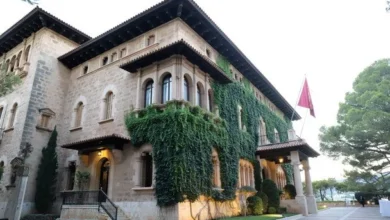
Organizers emphasize that Sant Jordi is not only about books and roses, but also a symbol of Catalonia’s cultural identity. This year, the government is reviving the traditional chocolate treat in the Pati dels Tarongers at the Generalitat palace, which was canceled last year due to mourning for the Pope. Safety remains the main constraint on the festival’s further growth, but interest shows no sign of weakening: each year, the number of participants and visitors rises, and new formats and venues make the celebration even more accessible.
In recent years, Spain has seen a trend of expanding cultural celebrations beyond their traditional centers. For example, major sporting events like Real Madrid matches are now often accompanied by changes in venues and new approaches to organization, as highlighted in the article about the reshuffling within the Madrid club— details about the changes in the football team. Such developments underscore the flexibility and adaptability of Spanish traditions to modern realities.
The Sant Jordi festival is a unique event in Catalonia, blending a book fair with large-scale public festivities. In recent years, both attendance and visitor numbers have been steadily increasing, while new formats and locations continue to draw people from different neighborhoods. In 2024 and 2025, the celebrations also included temporary changes to routes due to city works, but this did not dampen strong interest or record book sales. Similar festivals devoted to books and culture are held across other regions of Spain on a more modest scale, but they too are gaining popularity. Sant Jordi remains the key symbol of Catalonia’s book industry and cultural identity.