Spring 2026 in Madrid became a time when the city was thrust into the spotlight due to a series of high-profile incidents and decisions affecting thousands of residents. Several events and government initiatives sparked wide public reaction, and the consequences are already being felt across various districts of the capital and its surrounding areas. As El Pais notes, issues of security, social justice, and the quality of urban life have once again come to the forefront.
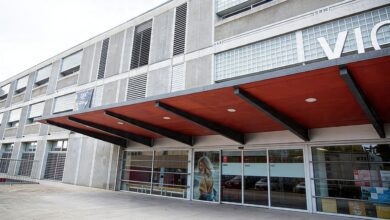
Among the most discussed events was an accident in a central Madrid parking garage, where a car with two elderly passengers suddenly fell to a lower level. Despite the severity of the incident, the injured sustained only minor wounds. This case has reignited concerns about the technical condition of city parking facilities and the need for greater oversight of their operation.
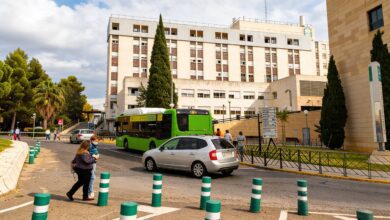
At the same time, authorities are investigating a tragedy involving a minor in the suburb of Villanueva de la Cañada. Local media report that the suspected perpetrator in the boy’s killing suffers from a mental disorder and is under observation at a hospital. The incident has sparked debate about child safety and the need to strengthen prevention measures for similar cases.
Authorities’ response
Madrid’s government did not remain on the sidelines. The city’s mayor, José Luis Martínez Almeida, decided to present opposition activist María Corina Machado with a symbolic award — the Llave de Madrid. This gesture was seen as support for democratic values and an acknowledgment of personal courage, drawing a strong reaction among politicians and the public.
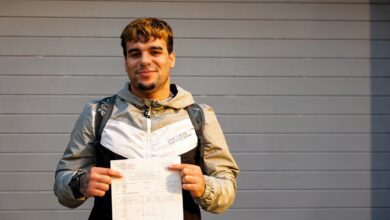
Meanwhile, the Ministry of Youth and Children, headed by Sira Rego, sought solutions for 14-year-old student Kian, who was denied participation in a UN international project due to US visa restrictions. The minister’s meeting with the teenager’s family sparked a discussion on children’s rights and the need to protect their interests at the international level.
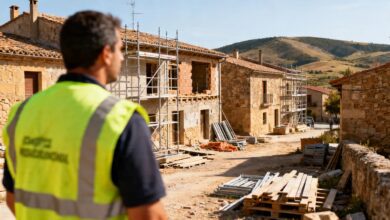
Another issue that stirred strong reactions was the working conditions in Madrid call centers. Police detained seven people on suspicion of exploiting foreign workers. According to El Pais, employees faced humiliation and worked without official rights, once again raising questions about the protection of labor migrants and oversight of employers.
Urban projects and fines
A conflict erupted in the Hortaleza district over a waste recycling project. Local councilor David Pérez unilaterally terminated an agreement that had made the area a model for composting initiatives. Afterward, the project was put out to tender, but no candidates stepped forward. The situation prompted a debate about the role of civic initiatives and support for environmental programs at the municipal level.
In the area of municipal property management, authorities decided to fine a company €355,000 for failing to meet its obligations to repair public housing. According to El Pais, this concerns more than a thousand critical malfunctions, including leaks and lack of heating, which residents had to tolerate due to the contractor’s inaction. As a result, the contract with the company was terminated, serving as an example of why strict oversight of public procurement contractors is essential.
Overall, the sequence of events in spring 2026 in Madrid illustrates how quickly the city’s agenda can shift. Issues of safety, social justice, and urban quality are moving from mere discussion to specific decisions that affect the lives of thousands.
Context and similar cases
In recent years, Madrid has repeatedly faced high-profile incidents related to safety on public transport and in residential buildings. For example, in 2024, an escalator accident occurred in one of the city’s neighborhoods, prompting a large-scale inspection of similar facilities. In 2025, the issue of migrant exploitation in the service sector was discussed, resulting in tighter employer inspections. The capital also regularly sees debates over urban environmental initiatives, from waste recycling to street greening. These events highlight that safety, citizens’ rights, and the quality of the urban environment remain central concerns for both residents and authorities.