The situation surrounding the construction of the cantonal facility in Montecarmelo has become one of the most talked-about topics in Madrid. The issue concerns not only the future of the neighborhood but also trust in the actions of the city authorities. Decisions made now could alter the approach to similar projects throughout Spain.
As El Pais notes, the Madrid City Council has submitted to the court the same project that previously sparked residents’ discontent and led to litigation. Despite the court’s demand for updated documentation, the authorities sent materials that still include industrial facilities such as waste compacting equipment and a gas station. This has sparked a new wave of criticism from local residents and civic organizations.
Legal proceedings
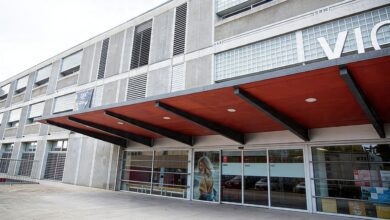
The lawsuit began after the Association of Victims of the cantonal facility project filed a claim, following a similar appeal from Colegio Alemán, a school located just 60 meters from the planned construction site. The court has already deemed the previous project version invalid, since industrial facilities require a mandatory environmental assessment, which was not conducted. Nevertheless, city officials continue to insist that the project concerns only auxiliary rooms for workers, not a full-scale industrial complex.
Court documents repeatedly state that the main function of the facility will be industrial activity, despite public statements made by officials. According to the initiative group “Plataforma No Al Cantón,” authorities are deliberately misleading the court, concealing the actual scale and purpose of the planned facility.
Dialogue with residents
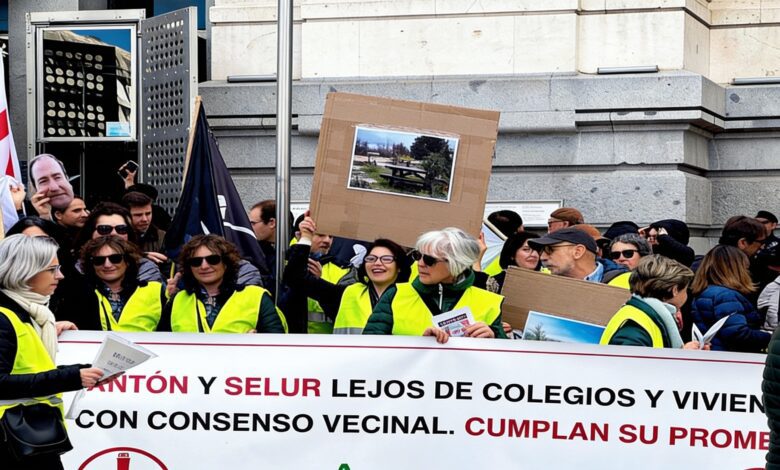
Residents of Montecarmelo have repeatedly tried to establish a dialogue with Mayor José Luis Martínez Almeida. After his public announcement expressing readiness to meet with representatives of the neighborhood, activists sent an official request for a meeting, but never received a response. According to El Pais, similar requests have been made several times, including with the support of thousands of signatures, yet the city hall has not responded.
Local residents believe that the lack of open dialogue and transparency only deepens mistrust in the authorities. Nevertheless, representatives of neighborhood organizations and associations continue to insist on the need to discuss the project and seek compromise solutions. At the same time, officials maintain that the facility poses no industrial threat, although official documents indicate otherwise.
Implications for the neighborhood
The construction of the cantonal facility raises concerns not only because of its potential industrial nature, but also due to its proximity to educational institutions and residential buildings. Residents fear a worsening of the environmental situation, increased traffic congestion, and a decline in quality of life in the area. According to russpain.com, such conflicts between residents and authorities are becoming more frequent in major Spanish cities, where ecological and urban infrastructure issues are especially pressing.
In Montecarmelo, the situation is complicated by the fact that local organizations had previously met with officials, but were unable to agree on relocating the facility. Now, residents hope that the court will take notice of inconsistencies between official statements and the content of the project documentation.
Context and similar cases
In recent years, disputes have repeatedly arisen in Spain over the placement of industrial and infrastructure facilities near residential areas. For example, in Barcelona and Valencia, residents have also protested against the construction of waste recycling plants and logistics centers near homes and schools. In several cases, courts have ruled in favor of citizens, requiring additional expert reviews and public hearings. These events show that transparency and public participation in decision-making are becoming increasingly important for urban communities.