Ayuso and Abascal cast doubt on postal voting before Spain's election
Isabel Díaz Ayuso and Santiago Abascal are warning voters against postal ballots. Their claims came hours after Pedro Sánchez called an early election for 29 November.
Isabel Díaz Ayuso and Santiago Abascal are warning voters against postal ballots. Their claims came hours after Pedro Sánchez called an early election for 29 November.
Pedro Sánchez has set Spain on the path to early general elections by dissolving the Cortes. The move, grounded in the Spanish Constitution, hands the decision to voters and reshapes the country’s legislative cycle.
Pedro Sánchez has called early general elections for 29 November 2026 after Congress rejected two housing decrees. The decision sets a compressed campaign timetable and ends the current parliamentary route.
Pedro Sánchez has brought Spain’s general election forward to 29 November after Congress rejected two housing decrees. The vote exposed the coalition government’s weak grip on parliament after months of pressure.
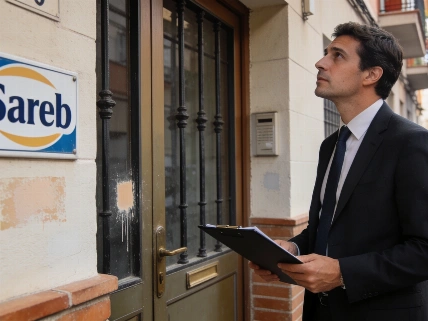
Blackstone has secured a €52.45 million contract to manage thousands of Sareb homes, including social housing, even as Spanish officials publicly attack the fund. The deal highlights a sharp split between political rhetoric and government action.
Pedro Sánchez faces mounting pressure to call early elections after Congress rejected his government’s housing decrees. With mass protests over rental prices and political allies turning away, the government is racing to salvage its agenda before the window closes.
Spain’s latest poll signals a dramatic shift: the right-wing PP and Vox would surpass 200 seats in parliament, while Pedro Sánchez and the PSOE register their weakest numbers in years. The left faces a sharp drop in support amid mounting social unrest over housing.
Pedro Sánchez is on the verge of announcing snap elections after the government’s housing decrees failed in Congress. Most PSOE leaders and ministers now see early elections as the only viable response to the political setback and public anger.
Top PSOE figures from Castilla y León, Castilla-La Mancha, Extremadura and the Basque Country are openly pressuring Pedro Sánchez to dissolve parliament and call elections now, seizing on the surge of public mobilization over housing policy failures.
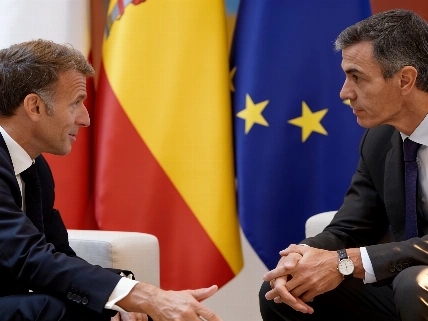
Emmanuel Macron and Pedro Sánchez are at odds over how to handle China’s electric vehicle push. While France demands tough tariffs, Spain courts Chinese investment to boost its manufacturing know-how.
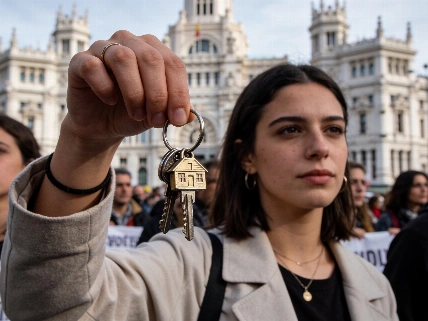
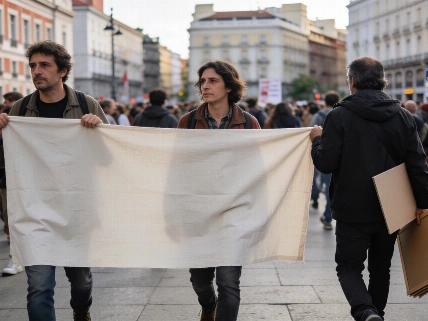
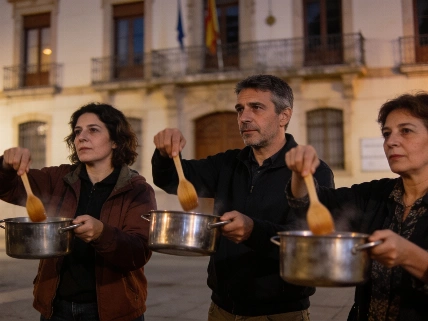
Madrid’s city center saw 70,000 people rally against housing injustice, with tenant unions demanding a general strike. The protest signals a powerful mobilization of the left, challenging both government and private interests amid looming electoral uncertainty.
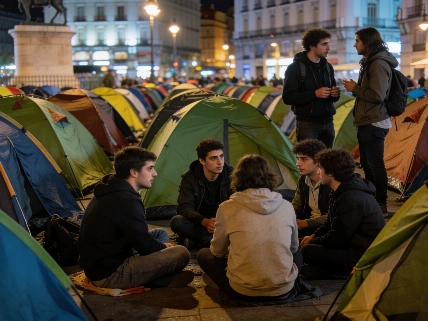
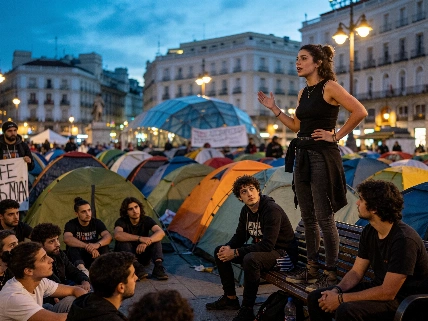
More than 50 protests are planned across Spain after Congress rejected two housing decrees. Madrid's camp remains active as tenant groups prepare a campaign for a general strike.
Isabel Rodríguez’s week as Spain’s housing minister unraveled after two basic decrees failed and a high-profile eviction reignited scrutiny of her record. Her property holdings and political trajectory are now under closer public examination.
Míriam Nogueras says Junts will reject the Government's housing decrees. She accuses Pedro Sánchez of putting electoral interests ahead of a workable solution.
Spain’s electric car buyers are caught in a political crossfire as government infighting threatens to halt subsidies. Plan Auto+ funds are exhausted and no new budget is in sight, leaving tens of thousands at risk of going without support for the rest of the year.
Mónica García says the left is ready for an early election at any time. She won’t say whether she’ll run, but promises Sumar will soon have a leader. The timing, she says, is up to Pedro Sánchez.
Spain’s Congress rejected two government housing decrees. Sánchez must now decide whether to call an early election as protests over rents and evictions spread beyond Madrid.
Spain's Congress has rejected two emergency housing decrees. The vote exposed the government's fragile majority and left renters facing fresh uncertainty as parties demand a different plan.
Congress has rejected the housing decrees. Sánchez could call an early election for 29 November if he announces it on 5 October.
A heated exchange in the Congress courtyard saw Sumar's Alberto Ibáñez accuse PP spokesperson Ester Muñoz of turning her back on vulnerable families by voting against basic housing decrees. The confrontation has reignited debate over political tone and tactics in Spain's parliament.
Senior PSOE officials and ministers are urging Pedro Sánchez to call early elections if Junts blocks the government’s housing decrees. The standoff could put Spain’s housing crisis at the center of a national campaign.
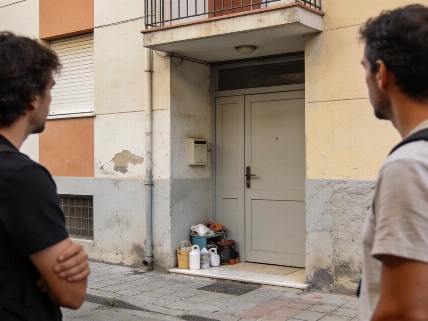
Spain’s Congress faces a critical vote on Pedro Sánchez’s housing decrees after the eviction of Maricarmen in Madrid. With Junts demanding new negotiations and protests erupting nationwide, the government’s future hangs in the balance.
Pedro Sánchez may call a snap election if Junts blocks basic housing decrees and public demonstrations intensify. Socialist sources believe citizen mobilization could shift the political balance in their favor, with November 29 emerging as a possible election date.
Tenant unions are mobilising nationwide ahead of Friday's 2 October parliamentary vote. They want both housing decrees approved, with automatic rent renewals and stronger eviction safeguards protected.
Juan del Val has sharply criticized the Spanish government's new housing decrees following the eviction of Maricarmen in Madrid. He accuses the PSOE of ignoring the real housing crisis and calls the second decree “absolutely perverse.” The measures now await Congress approval.
Junts has delivered a major blow to Pedro Sánchez by rejecting the government's housing decree. The move puts the coalition's fragile majority at risk and exposes deep divisions over housing policy just months before elections.
Isabel Díaz Ayuso has launched a legal challenge to clear the Puerta del Sol protest camp, alleging that it is part of a calculated effort by the left to keep Pedro Sánchez in power. Her remarks on live television have reignited debate over the boundaries of protest and political maneuvering in Spain.
Junts has delivered an ultimatum to Pedro Sánchez, vowing to block two basic housing decrees unless the government withdraws them and drafts new legislation. The standoff exposes deep divisions over how to address Spain’s housing crisis and protect vulnerable tenants.
Spain's Congress will vote on two housing decrees this Friday. The session begins at 11:00, with results expected around 15:00 after a separate debate on each measure.
Pedro Sánchez will not accompany Felipe VI and Letizia in Ceuta and Melilla. A Government minister will join the monarchs during their visits on 13 and 14 October 2026.
Pedro Sánchez made a high-profile stop at Delta Vigo’s basic plant, signaling government support for the Galician engineering group’s growing role in Airbus projects. The visit highlighted Delta’s technical expertise and expanding presence in the European aerospace sector.
Spain’s top prosecutors denied holding documents on a controversial case involving Judge Beatriz Biedma. But testimony from Badajoz’s chief prosecutor revealed exchanges with Madrid, raising fresh questions about the investigation’s integrity.
Spain will be the only EU country to vote against the new regulation, which would allow migrants to be detained for up to 24 months and authorize deportation centers outside the EU. The move leaves Spain isolated on migration policy as the rest of the bloc pushes for tougher measures.
Sumar has openly claimed responsibility for halting a government decree aimed at speeding up migrant returns from Ceuta. The move exposes sharp divisions within Spain’s coalition and raises new questions about migration policy at the country’s southern border.
Pedro Sánchez has ramped up his personal security to levels unseen in Europe while pushing through controversial rental decrees that risk freezing Spain’s housing market. His actions reveal a growing disconnect between the government and the people it claims to serve.